

Short videos have taken over social media and are already part of the daily routine of almost every connected user. What few know, however, is that there is a reason for the success of this format: the algorithms of the main digital platforms have increasingly preferred short, captioned videos. It is not luck but strategy, both for those who publish and for those who wish to gain relevance and engagement.
Fast consumption and the new digital behavior
A few years ago, watching a 10-minute video was considered reasonable. With so many options and content competing for every second of attention, the audience chose: short, direct videos, with clear information and, whenever possible, captioned. The average retention time itself has decreased, and today, content over 60 seconds is already seen as long on platforms like Instagram and TikTok.
The eye stops, the finger slides, the algorithm reacts.
The algorithm learns from user preferences and prioritizes content that keeps the audience engaged until the end. When it notices that short videos keep people interested from start to finish, it begins to show this format more and more to similar users. Just a boom in engagement, and voilà: the video can go viral.
The importance of captions in retention and accessibility
Captions have moved from the realm of accessibility to become tools for engagement and reach. According to a study by the Franciscana University, even advertising campaigns are recognizing the need for resources like captions to reach deaf individuals, but there are still barriers. The limited adoption of these practices shows how there is room for evolution and differentiation using captions strategically.
By offering captions, the creator expands the potential audience, reaching:
- Those who watch without audio (public transport, work, public places)
- Deaf or hard of hearing individuals
- Users who do not speak the original language of the video fluently
- People with difficulties in auditory concentration
According to guidelines from the Federal Institute of Paraíba, descriptions, captions, and other resources are essential to ensure full accessibility on social media, showing that this goes beyond engagement; it is also about social responsibility.
How does the algorithm understand short, captioned videos?
Platforms like Instagram, TikTok, and YouTube seek content that generates more retention and interaction. They analyze data in real-time: how many users watch to the end, who shares, who comments, and, of course, how many consume without audio, just reading the caption. This behavior shapes everything.
The greater the retention, the greater the algorithm’s reward: more reach, more views, more chances of going viral.
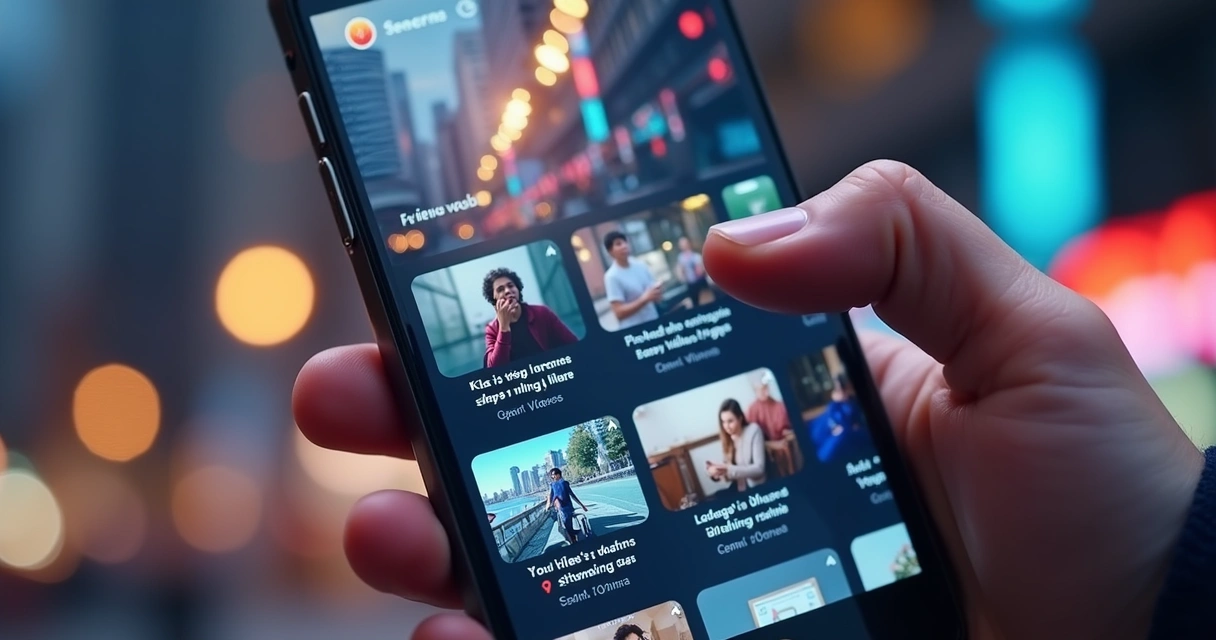 The greater the retention, the greater the algorithm’s reward: more reach, more views, more chances of going viral.
In the case of captioned videos, there is also an impact on the user experience: the person consumes the content silently but without missing any important information. Thus, viewing time increases, sharing grows, and the algorithm delivers it to new audiences.
SEO and indexing in short captioned videos
Few people know, but captions contribute to SEO indexing within the platforms’ own mechanisms. Terms, phrases, and topics appear in searches, making the video show up even to those who do not follow the creator, expanding organic distribution. AI tools already analyze the words written in the video and suggest material according to user intent.
Strategies for brands and creators: engagement potential
Brands and creators quickly recognized the power of videos up to 1 minute, captioned, and with objective themes. According to guidelines from the Paula Souza Center, addressing topics in clear language and broad access is the way to reach diverse audiences. With well-placed captions, attractive titles, and precise cuts, it becomes easier to go viral and engage.
Here are some actions used by those who stand out on social media:
- Select only the most impactful parts of the video for short cuts, as shown in the article about short videos with artificial intelligence.
- Use dynamic and colorful captions that attract the eye and reinforce key messages.
- Add hashtags and titles that connect with recurring searches within the platforms.
- Invest in striking visual templates that align with the brand’s identity.
These strategies significantly increase viewing time and interaction volume compared to long, captionless videos. The article on how to make money with short Reels and Shorts videos provides examples of financial returns and engagement multiplied by the adoption of this method.
The role of automatic captioning tools and AI
With the popularity of captioned videos, gaining speed has become a necessity. In the past, captions were laborious: they had to be typed manually, synchronized, and reviewed by hand. Today, solutions like VDClip have completely changed the scenario, automating the curation of excerpts, generation of captions, translations, and visual organization.
 According to a study from the Federal University of Campina Grande, the addition of audiovisual resources like captions still faces resistance in certain niches, but the performance is unquestionable where the application is efficient. Automated platforms offer time savings, accessibility, and a real chance to compete with large channels on social media.
Moreover, modern AI-based resources can identify the main phrases and terms from the video, suggesting captions, hashtags, and even optimized titles, as detailed in content focused on the automatic creation of cuts and captions on YouTube.
Organic distribution and visual trends on platforms
The success of short captioned formats is not accidental. The audience seeks quick, visual experiences that are easy to understand and appeal to different styles of consumption, such as reading, listening, and interaction. The article on automatic editing of Shorts for YouTube shows data on expanded distribution thanks to the use of artificial intelligence and optimized captions.
Objective content with visual appeal and captions captures diverse audiences and promotes inclusion. By aligning engagement strategies, accessibility, SEO, and technology, short captioned videos establish themselves as a trend that is hard to ignore.
Conclusion: how to benefit from this algorithmic preference?
For those who wish to grow on social media, impact audiences, and compete for engagement, the answer is clear: investing in short, objective, and captioned videos is no longer an option but a strategic step. The end user consumes more, interacts more, and shares more of this type of content. The algorithm responds with more reach, visibility, and potential for virality.
Tools like VDClip make it possible to create, cut, caption, and optimize videos in minutes, democratizing creation for all types of creators. By using these solutions, it is possible to meet the algorithm’s demands and ensure more inclusive, accessible content ready to carve out its space in the battle for viewers’ time.
Those who want to experience this transformation can access VDClip.com and test the automatic creation of short captioned videos, paving the way for visibility on social media and real results!
Frequently asked questions about short captioned videos
Why do short videos have more reach?
Short videos tend to retain more attention from the audience, which makes platforms prioritize this delivery. The algorithm values content watched to the end, which is more likely to be shared and commented on, organically increasing reach.
Do captions increase engagement in videos?
Yes, studies show that captioned videos allow more people to understand the content, regardless of the language or situation in which they watch. Captions facilitate consumption in silent environments and make the content accessible to people with hearing impairments.
How to use captions to grow on TikTok?
On TikTok, dynamic captions with highlighted keywords and simple language retain the user for longer and increase the chances of the algorithm boosting the video. Using automatic tools can help maintain the consistency and quality of captions.
Is it worth investing in captioned short videos?
Yes. Producing short videos with captions expands the audience, improves retention, and facilitates indexing by algorithms, increasing the chances of virality and consistent engagement.
Does the algorithm favor videos without captions?
Videos without captions can still go viral, but they have lower potential for inclusion and engagement. With the rise of consumption without sound and the quest for accessibility, videos with captions are more likely to stand out in recommendations.