
In recent years, a new chapter has begun for those who work with video. Short video has dominated social media, but the major bottleneck has always been afterwards: post-production. Producing content has never been easier, all it took was a smartphone. But transforming a long recording into engaging videos for TikTok, Shorts, or Reels used to mean sleepless nights, high costs, and a lot of manual editing.
In 2026, the landscape is very different. And to understand where this turnaround came from, just look at real stories. Sekou, for example, went from zero to 13 thousand subscribers in just a few months. Do you know how much time he dedicated weekly to editing? Half an hour. That’s right. Previously, this result would have required hundreds of dollars; some users spent about $400 per batch with freelancers. Today, they produce everything in-house, at a fraction of the cost and, believe it or not, in minutes.
Creating a viral video is no longer a matter of luck: it’s now a matter of flow.
The secret to this change lies in AI video editors. They rewrite the rules of the game, automate repetitive tasks, and allow production pace to be drastically accelerated. But how have these tools changed your process? Who can benefit? And, most importantly, what is the way to extract the most from this new universe?
From Manual Post-Production to the Power of Automation
Previously, producing for YouTube, Instagram, TikTok, or podcasts required a lengthy ritual: watching hours of footage, noting the best snippets, making manual cuts, creating synchronized subtitles, exporting in multiple formats. Sometimes, only to find out later that the long video didn’t gain traction.
The focus was never on recording; the biggest effort was always in transforming raw material into engaging pieces ready to go viral. And this is where AI video editors find fertile ground for innovation.
- Automating the selection of the best snippets, identifying impactful speeches and moments of highest engagement.
- Adding dynamic subtitles, automatically translating, and maintaining visual identity.
- Adapting videos for different formats without losing focus on faces or cropping errors.
- Removing silences, long pauses, or noise in seconds.
In just a few clicks, tasks that would take hours or days are resolved almost in real time.
 Real Examples: Transformation Stories with AI
 Real Examples: Transformation Stories with AI
Sekou was not the only one to feel this wave. Small creators, influencers, and marketing teams are reinventing their workflows:
- Digital entrepreneurs who publish dozens of short videos weekly from previously shelved podcasts.
- Agencies that can deliver personalized cuts and edits for clients across all segments, drastically reducing revision requests.
- Marketing teams from small businesses that, previously limited by budget, now professionalize internal events and training.
According to data presented on the TV Câmara’s Popular Participation program, the advancement of artificial intelligence represents not only a renewal of daily tasks but also drives a new perspective on creativity and value delivery in traditional video areas.
The New Focus: Less on “Whether to Use AI” and More on How to Extract Value
Today, the real discussion is no longer about “whether to use AI” but rather about which tool fits what each creator needs, whether it’s to transform long videos into viral cuts, edit podcasts by text, cut straight from the phone, or edit collaboratively.
What stands out most in 2026 are the innovations of this new landscape:
- Text-based editing, where the video is adjusted simply by editing the transcription, speeding up work by up to five times.
- Automatic evaluation of the viral potential of each snippet, helping to choose the best cuts.
- Automatic reframing to adapt content to vertical formats, TikTok, Shorts, Reels, without cropping faces or losing the essence of the recording.
- Multilingual support, allowing subtitles in Portuguese, English, Spanish, and various other languages without extra work.
These functions shift the manual editing exercise to intelligent curation, where the human role concentrates on creativity, scripting, and critical insight.
What is an AI Video Editor?
Simply put, an AI video editor is a system that automates tasks that used to require time, technical knowledge, and patience. Among its functions, the following stand out:
- Automatic transcription of the video’s audio, allowing for text-based search or editing.
- Detection of the best moments, smart cuts, and removal of unnecessary silences.
- Generation of accurate subtitles with automatic synchronization.
- Identification of speakers, allowing separation of speeches in interviews or podcasts.
- Reframing for multiple formats, adapting frames for the video to look good both horizontally and vertically, aligned with the standards of each social network.
- Aspect ratio adjustment, automatic title selection, and even suggestion of relevant hashtags.
An AI video editor is synonymous with savings, speed, and consistent quality.
According to a study by the International Labour Organization, nearly 40% of jobs in Latin America and the Caribbean may be influenced by generative AI. In video, this means more production, new functions, and fewer operational bottlenecks, without excluding the creative role of the human being.
The Major Trends of 2025 and 2026 in Using AI for Video
AI-powered video editors are maturing. In the coming months, the biggest advancements are expected to be:
- Text Editing: The video can be assembled simply by editing the transcription, as if it were a Word document. Cut a line? The video cuts. Changed the order of sentences? The image follows.
- Virality scoring: algorithms that analyze each snippet and, based on models and patterns, suggest which cuts have the highest chance of going viral on social media.
- Automatic adaptation for vertical and horizontal formats, including smart framing to always keep what matters in focus.
- Generation of multilingual versions, with dynamic subtitles and automated translation.
- Automation of scheduling and direct publication on multiple accounts and networks, simplifying mass distribution.
More details about these innovations can be found in the analysis of video editing with AI.
Who Benefits from AI Video Editors?
In 2026, technology has democratized the creation of short videos, giving prominence to three main profiles:
- Solo creators, influencers, and YouTubers who publish weekly across various platforms.
- Marketing and communication teams that transform events and internal videos into recurring content, gaining frequency and scale without increasing budget.
- Agency and business teams that need to maintain visual standards, edit in volume, and ensure quick delivery without sacrificing personalization.
How do you know if it’s time to change your workflow? Some signs:
- Many long videos without repurposing or presence on social media.
- Constant reliance on freelancers for small edits or routine cuts.
- Difficulty maintaining posting frequency.
- Spending more time on editing than on recording or scripting.
If at least two of these points appear in your routine, upgrading to an AI editor is not only advisable but almost urgent.
 Comparison Criteria Between AI Video Editors
 Comparison Criteria Between AI Video Editors
To choose the best solution, professionals and companies evaluate various factors that go beyond price:
- Accuracy of transcription: The more accurate the audio transcription, the faster the text editing and the less time spent reviewing.
- Intelligence of cuts: Ability to identify truly relevant moments, without artificial cuts or manual adjustment needs.
- Editing model: Whether it allows text editing, traditional timeline, or both.
- Quality of exported video: Resolution, application of watermarks, and customization options.
- Collaboration: Support for multiple users editing together, comments, and permission control.
- Integration with social networks: Direct export or scheduling on platforms like TikTok, Instagram, and YouTube.
- Ease of use: Clean interface, quick onboarding, and accessible documentation.
- Cost: Free plans typically limit minutes, resolution, and apply watermarks; paid plans allow unlimited videos, watermark-free exports, and collaboration features.
There is always a trade-off between speed and manual control. Very automated tools simplify processes but may limit fine adjustments. On the other hand, more open editors require some training but allow for detailed customization, ideal for videos that require specific narratives.
Understanding Free and Paid Plans in AI Video Editors
Free plans usually offer a taste of the power of AI, with restrictions such as:
- Limited video minutes per month or per export.
- Defined maximum resolution (e.g., HD).
- Application of watermarks on final videos.
- Advanced features, such as collaboration and scheduling, available only in subscriptions.
In paid plans, the limitations fall away. The creator can export videos in 4K, eliminate watermarks, gain visual identity kits, automate publications, and receive dedicated support.
Finding the most suitable option requires aligning publication needs, content volume, and budget. After all, the savings generated by AI rarely boil down to financial aspects, but rather free up time, focus, and creativity.
Highlighted Tool: What VDClip Delivers in 2026
VDClip positions itself as an editor designed for creators, businesses, podcasters, agencies, and content teams who want to transform long videos into many optimized short cuts for social media.
The flow is simple:
- The user uploads their long video to the platform.
- Automatically, the system presents cut suggestions, already scoring the viral potential of each.
- Everything can be adjusted by editing the transcription text: cutting phrases, changing the order, removing pauses.
- Customizable templates facilitate visual standardization, while brand kits make each cut retain the creator’s identity.
- Publication can be done directly on multiple networks or scheduled for peak engagement times.
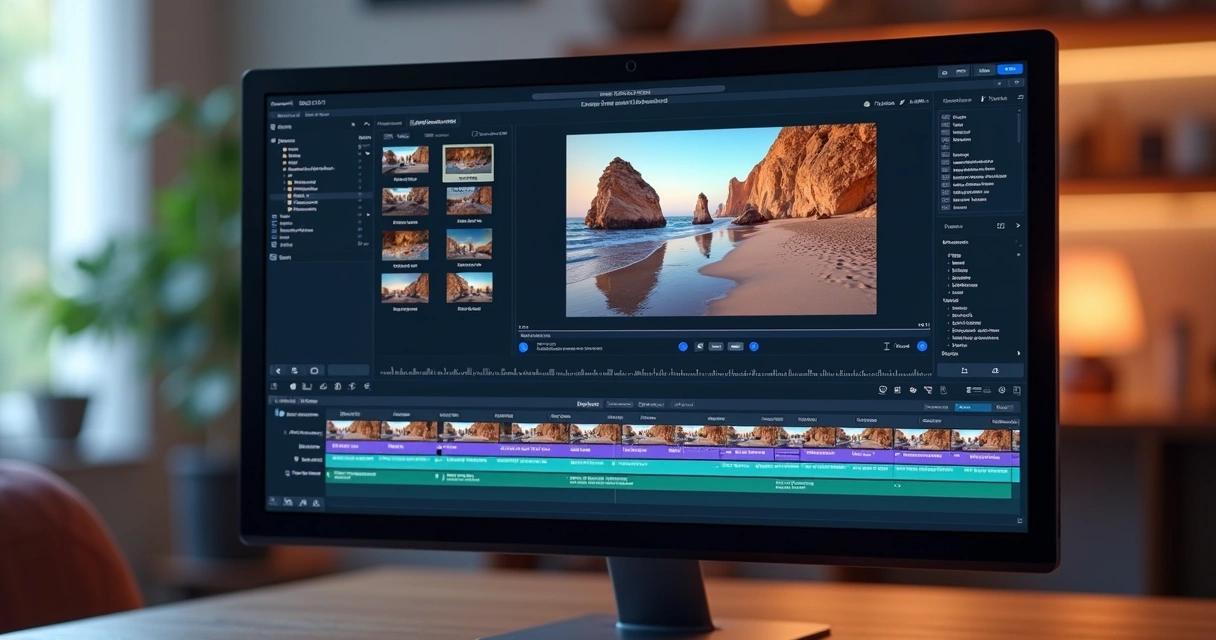 Among VDClip’s features, the following stand out:
- Automatic curation of the best moments, no need to watch hours of footage in search of the ideal snippet.
- Edit by text or timeline, adaptable to the user’s style.
- Brand kits to insert logos, colors, and standard fonts into each video.
- Team collaboration, allowing multiple editors to review and approve content together.
- Generation of relevant subtitles and hashtags, right at the moment of cutting.
- Optimized export for TikTok, Instagram Reels, YouTube Shorts, with frames adjusted automatically.
- Multi-platform scheduling and publication to maintain frequency and reach more people.
VDClip’s mission is to make the process intuitive, even for those who have never edited videos before. It democratizes the delivery of professional content, eliminating the technical barrier, speeding up routines, and making it possible to post with quality and consistency.
Want to know more step by step? At how video editing with AI works, you can understand functionalities and see examples from theory to practice.
When is it Worth Reassessing Your Video Workflow?
Professionals attentive to their own time notice, sooner or later, some of these symptoms:
- Hours spent reviewing the same recording looking for the right moment for a cut.
- Costs that keep rising with freelancers and last-minute revisions.
- Content produced but little published due to lack of manpower for editing or adapting for each platform.
- Difficulty creating routines, varying themes, and engaging followers on social media.
Tools like VDClip act precisely on these points, allowing for organization, redistribution, and the creation of a true production line. Those who follow the trends of automatic video editing realize that the secret lies in automating the trivial to invest energy in creativity.
The Creative Role Remains Irreplaceable
Despite all the advancements, AI will never replace the insight, scripting, or human touch. What changes is the relationship with repetitive and time-consuming tasks, which are now reserved for machines. The time saved can be invested in thinking strategies, scripting better videos, interacting with the audience, or testing new formats.
 Companies gain agility, creators gain freedom, and long videos gain second, third, and fourth lives across different channels. The result is reach, consistency, and engagement, without sacrificing the identity of those who produce.
Start Transforming Long Videos into Great Results
With the arrival of AI video editors, more important than knowing whether to adopt the innovations is to reflect: does your routine need more creativity or more time wasted on operational tasks?
Tools like VDClip show that innovating doesn’t require past experience in editing or high budgets. For those looking to grow on social media, transforming raw content into viral cuts and maintaining posting frequency has become a natural choice.
Your next viral could just be waiting for a smarter edit.
Visit the page about automatic cuts in video with AI and try transforming your videos, your engagement, and your digital presence. Discover the fastest way to publish without relying on traditional editors and see, in practice, the results that only automation can deliver.
Conclusion
Editing videos has never been simpler. In 2026, those who understand the game of artificial intelligence now focus their time where it really matters: creativity, strategy, and presence. Editors like VDClip make professionals more agile, teams more productive, and companies more visible.
The future has arrived. Now, building authority, followers, and results is just a few clicks away, within reach of those who say yes to automation. Embrace the moment, transform your production, and become the protagonist of the new video era!
Frequently Asked Questions about AI Video Editors
What are AI video editors?
AI video editors are platforms that automate tasks such as cutting, transcribing, subtitling, identifying the best snippets, and adapting formats, using artificial intelligence to speed up editing and generate videos ready for social media. They identify relevant parts, produce subtitles automatically, and suggest ideal visual adjustments, all in less time and with less manual effort.
How to use AI to edit videos?
To use AI in video editing, simply upload your raw material to a platform that supports artificial intelligence. The system will analyze, suggest cuts, create subtitles automatically, allow text adjustments, and export in the desired formats. The user can also customize with templates, brands, and schedule publications, making the process simple and efficient.
Is it worth investing in AI video editors?
Yes, because AI video editors drastically reduce the time spent on routine edits and optimize resources, allowing for more consistency and quality. In addition, they offer a competitive advantage by enabling creators and companies to publish more, with greater regularity and personalization, making better use of existing content.
What are the best AI video editors?
The best editor depends on each user’s needs. For those looking to transform long videos into social media-ready cuts, solutions like VDClip offer automatic curation, text editing, customizable templates, subtitles, translation, multi-platform scheduling, and team collaboration. The choice should always consider the resources offered, ease of use, integrations, and cost-benefit.
Where to find free AI video editors?
There are free versions of AI editors that allow you to test basic features such as cuts, subtitles, and limited export. Generally, these plans impose restrictions on minutes, resolution, and watermark usage. With VDClip, for example, you can start experimenting with automatic editing and feel in practice the impact of artificial intelligence on video production.