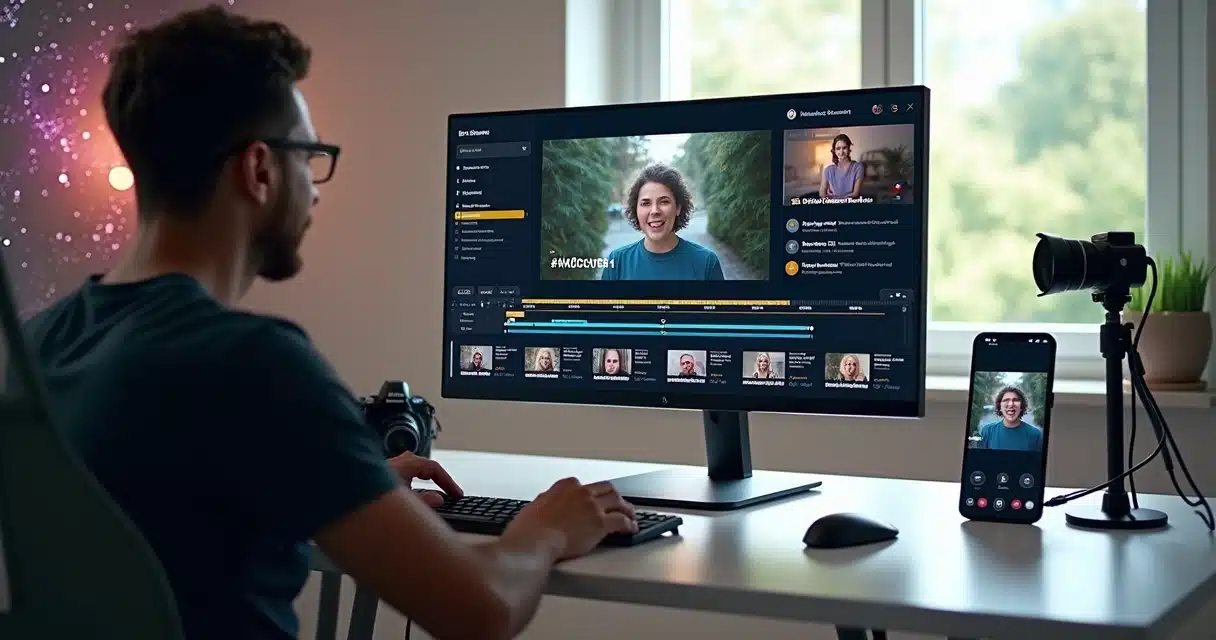

In a digital world that values every second of attention, video content has become the universal language among brands, creators, and consumers. Rapid consumption, especially on networks like TikTok, Instagram, and YouTube, requires not only creativity but also agile and efficient production processes. It is in this scenario that artificial intelligence platforms for automatic editing are gaining ground, making the creation of viral clips more accessible than ever.
Discovering how to use AI to edit videos automatically is no longer exclusive to specialists or expensive editing teams. Nowadays, it is possible to transform long recordings into quick, engaging content ready to go viral with just a few clicks – and understanding this process makes all the difference for those who want to grow on social networks.
The impact of short videos and the need for automation
According to market data, 96% of people watch explanatory videos to learn about products or services, and 88% have been convinced to buy from this format. Additionally, 90% of consumers prefer to watch content on their phones, reinforcing the value of short and direct videos.
Short videos refresh brands and connect audiences in just a few seconds.
In this context, manually editing videos has become a challenge due to the volume of content required and the need for specific adaptations for each platform. This raises a natural question: how to find, cut, and enhance the best moments of a video without wasting time or relying on editing experience?
How automatic video editing with artificial intelligence works
AI-based automatic editing uses advanced algorithms to quickly analyze lengthy videos. The goal is to identify relevant excerpts, separate high points, generate precise cuts, and often even add subtitles, titles, and optimized hashtag suggestions to engage on different social networks.
 The great advantage of automatic solutions lies in the intelligent curation of the most engaging moments of the video, using audio pattern recognition, speech analysis, and even face detection to ensure natural and engaging cuts. On platforms like VDClip, simply upload the original video for the system to process and deliver clips ready to go viral.
Steps of the automated process
- Automatic recognition: The system identifies excerpts where there are changes in theme, emotional peaks, or relevant interactions.
- Precise cuts: AI makes exact divisions, preventing sentences from being cut in half or important excerpts from being lost.
- Subtitle generation: The audio is automatically transcribed and turned into synchronized subtitles, often with customization options for color and font.
- Title and hashtag suggestions: Based on the content and trends, titles and hashtags that increase the chances of going viral are suggested.
- Face tracking: Keeping focus on the main participants, even in dynamic cuts, ensuring a professional result.
Behind the scenes, artificial intelligence compares thousands of data points, reacting to changes in tone in the voice or keywords indicating moments of higher engagement. The result is a set of short videos, ready for different platforms, produced in minutes.
Main features of AI automatic editing platforms
Whether for content creators, agencies, businesses, or podcasters, the characteristics of AI-focused automation tools present several competitive advantages. Here are the main features found in platforms like VDClip:
- Automated curation: Identification of the most relevant and potentially viral excerpts.
- Automatic cuts: Separation and export of videos in different formats, ready for Shorts, Reels, or TikToks.
- Transcription and dynamic subtitles: Synchronized subtitles, allowing for greater accessibility and engagement, even with the possibility of automatic translation into other languages.
- Title and hashtag suggestions: Based on best SEO practices and current internet trends.
- Customizable templates: Layout, animation, and style options that give the video a professional appearance without much effort.
- Integration with social networks: Posting and scheduling directly from the editing platforms to Facebook, Instagram, YouTube, and more.
 These features remove technical barriers, speed up the editing process, and ensure that even those who have never edited a video can compete on equal footing with professionals.
How AI automation saves time and resources
The time spent on manual editing can be precious – especially for those who need consistency and volume on social platforms. Automation allows you to dedicate energy to content creation itself, leaving the task of selecting and enhancing the best moments to the machine.
- Fewer editing hours: A job that used to take days can now be done in minutes.
- Cost reduction: There is no longer a need to invest in expensive software or hire experienced editors for simple tasks.
- Agile publishing: Integration with social networks speeds up posting, keeping the profile always active and engaged.
- Standardization of quality: Automatic cuts follow standards that avoid basic errors and increase the chances of the videos standing out.
Users report a time-saving and confidence-building experience upon realizing that AI can, indeed, replicate creative decisions without compromising the quality of the outcome.
Practical examples of workflows using AI
To illustrate how automation works in the routine of content creators, imagine the following process, quite common among YouTubers, podcasters, and companies:
- Recording the main video – This could be a chat, interview, tutorial, or podcast episode, lasting over 30 minutes.
- Uploading the file to the AI platform – For instance, through the VDClip website, the video is uploaded quickly and securely.
- Automatic processing – The system analyzes the content, performs intelligent curation, makes cuts, and generates subtitles and title suggestions.
- Quick review of suggested clips – The user views, adjusts details if desired, and selects the best clips for each social network.
- Customization and export – Adapting templates or subtitles, exporting in ideal formats (vertical, square, horizontal).
- Posting and scheduling – With just a few clicks, videos go live at the best times to engage audiences.
Twelve hours of editing turned into fifteen minutes of automation.
This way of working is even more powerful when combined with intelligent targeting for TikTok or YouTube Shorts. For those who want details about how to make automatic cuts with AI, the guide Automatic Cuts: how to use AI to create viral clips explains the process step by step.
Why does AI democratize content creation?
The biggest benefit of this technology is opening doors for those who previously did not have access to resources, time, or technical knowledge. Even beginner influencers or small businesses can gain competitiveness when they have automatic solutions like VDClip.
- The low barrier to entry allows testing ideas without the fear of losing precious hours.
- Large teams are dispensable for repetitive tasks.
- Access to professional editing standards is just a click away.
- The consistency of publications becomes a reality, strengthening digital presence.
 In this way, AI democratizes visibility and creativity on social networks. With it, energy is not wasted on manual tasks but is instead focused on delivering authentic, powerful, and relevant messages.
Choosing tools: how to select the ideal platform for each need
When looking for an automatic editing tool with artificial intelligence, some criteria make a significant difference in achieving consistent and professional results:
- Ability to analyze long videos: Does the solution support large files without losing performance?
- Quality of automatic curation: Do the chosen excerpts make sense, flow well, and maintain the narrative?
- Customization of templates and subtitles: Is it easy to adapt styles and colors to the visual identity of the channel?
- Export options: Are there formats ready for TikTok, Reels, and Shorts?
- Integration with social networks: Does the tool allow direct scheduling or publishing?
- Security and privacy: Are the uploaded videos protected and not shared without authorization?
These assessments are even more relevant for companies, agencies, and podcasters, who need reliability and agility in their processes. Platforms aligned with the Brazilian context, like VDClip, offer an interface in Portuguese, local support, and functionalities optimized for the local audience.
For those starting in the YouTube Shorts clip universe, for example, you can find answers and practical tips in the article YouTube Shorts Creator: automatic editing via AI.
Tips and precautions to ensure the quality of automatic videos
The practicality of automatic solutions with AI is evident, but maintaining a critical eye on the final result ensures the success of the publications.
- Review the suggested cuts: Small adjustments can transform a good clip into an excellent one.
- Adapt subtitles and colors: Ensure contrast and readability regardless of the video background.
- Pay attention to originality: Use automation to reach more people, but always keep your style and identity present.
- Check formats before publishing: Ensure that the video’s aspect ratio is correct for the chosen network.
Tools like VDClip allow testing different versions of the same content in minutes, optimizing learning and identifying what engages your audience the most.
If the goal is to transform long videos into viral shorts, it’s worth reading the content Transform long videos into viral shorts with AI, which brings ideas and practical examples for creators in different niches.
Strategies to make AI-edited clips go viral
The viralization of content involves both the technical quality of the videos and strategies for storytelling and distribution. The automated process is a powerful tool, but some points increase the potential of the clips:
- Make use of hooks in the first seconds: Cuts that begin with questions, promises, or surprise moments capture attention immediately.
- Keep subtitles dynamic: In addition to being accessible, they make the video easier to consume in public settings, where many watch without sound.
- Use titles that spark curiosity or offer direct solutions.
- Adapt formats to each network’s algorithm: Vertical videos for Shorts and Reels, horizontal for traditional YouTube, square for Facebook.
- Test hashtags suggested by the platforms: Usually, the automatic suggestions are already adapted to current search trends and challenges.
Users report that by adopting tools like automatic clip generators by AI, they were able to not only increase the frequency of posts but multiply engagement in no time.
Multiplying results with integration and consistency
Automation only proves truly powerful when combined with the discipline of publishing consistently and analyzing the performance of the videos. Platforms like VDClip already offer basic performance reports and easy integration with social networks, making the creation and publication cycle even smoother.
- Use automatic integrations to not miss the timing of trends on social networks.
- Schedule posts for the peak traffic times of your audience.
- Experiment with different templates and styles of cuts to identify patterns of viralization.
This creates an ecosystem where creativity and technology go hand in hand – and the time once spent on manual cuts is now dedicated to brainstorming new ideas.
If you’re curious about how to practically choose an app that performs automatic video cuts, the practical guide on automatic cut apps provides valuable guidance and recommendations.
Why VDClip is a reference in AI video editing
VDClip stands out as a 100% national platform designed for the Brazilian audience, with local support and complete integration with the largest content channels in the country. The proposal aims not only to automate tasks but to create a true partnership between technology and creators.
- Easy and fast-to-use interface;
- Advanced solutions for curation and smart cuts;
- Customization tools for different niches and styles;
- Complete options for exporting and sharing;
- Support in Portuguese, as well as affordable prices for the national market.
For those looking to transform their content production routine and grow on social media, getting to know VDClip could be the first step towards going viral.
Conclusion: AI and the future of video editing
Intelligent automation has established itself as the new standard in the world of short videos, transforming hours of manual work into agile and scalable processes. Understanding how to automatically edit videos with AI is now a competitive differential, accessible and necessary for influencers, companies, and anyone looking to build an impactful digital presence.
Tools like VDClip combine technology, ease, and creativity, allowing any user to achieve professional results. Try automatic video editing with AI now and discover the power of creating engaging and viral clips in minutes.
Frequently asked questions about automatic video editing with AI
How does automatic video editing with AI work?
Automatic video editing based on AI uses algorithms that identify, cut, and enhance relevant excerpts autonomously. The system analyzes audio, image, and even facial expressions, automatically separating the best moments, generating synchronized subtitles, and suggesting creative adjustments. Platforms like VDClip deliver clips ready for publication on different networks.
What are the best AI programs for videos?
In the Brazilian market, tools focused on practicality and national support stand out, such as VDClip. When looking for a program, it is advisable to evaluate the quality of automatic cuts, support for multiple networks, customization features, and automatic integrations to facilitate posting and scheduling.
Does AI replace manual video editing?
AI can automate much of the repetitive tasks in video editing, but manual review is still important to refine creative details and adapt each video to the creator’s identity. The combination of automation and human intervention provides far superior results, merging agility with authenticity.
Is it expensive to edit videos using AI?
Editing videos with AI tends to be much more accessible than traditional alternatives, as it eliminates costs associated with expensive software and reduces the need to hire specialized editors for basic tasks. Platforms like VDClip offer plans tailored to the Brazilian public, making access to technology simple and economical.
How to create viral clips with artificial intelligence?
Using AI to create viral clips involves leveraging automatic curation resources, precise cuts, and personalized subtitles. Invest in direct scripts, start videos with an engaging hook, adapt formats to each platform’s algorithm, and test different titles and hashtags suggested by artificial intelligence. Using specialized platforms like VDClip increases the chances of going viral and simplifies the entire editing routine.