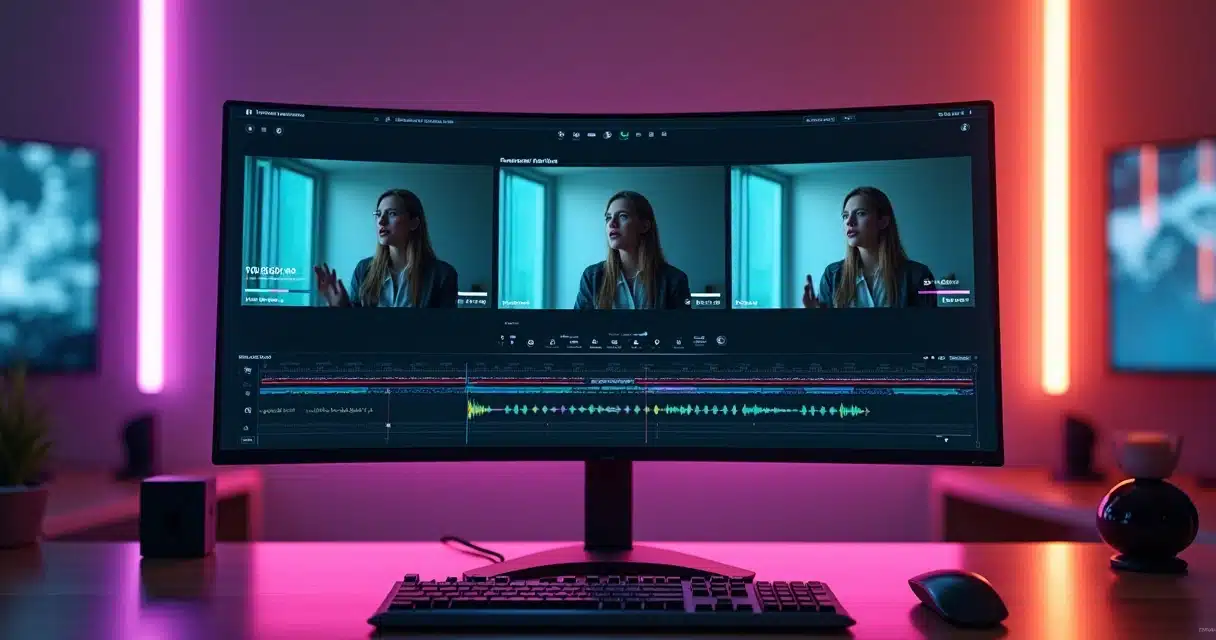

In the digital universe, adapting videos for each platform is almost a superpower. TikTok, Instagram Reels, YouTube Shorts, and LinkedIn require different formats, and delivering the same content for all without losing quality can often be a creative nightmare. This is where a resource called AI reframe transforms the game.
The challenge: multiplying formats without losing focus
A podcast recording that shines on YouTube may appear awkward on TikTok because the horizontal video “crushes” on vertical screens. Social platforms prioritize videos created for that framing. When someone publishes the wrong format, the content loses impact and can even seem less professional.
This is one of the biggest obstacles for content creators or anyone working with videos today. The demand is clear: transform long videos into short, viral versions, with precise cuts tailored for each network. However, doing this manually—cutting, repositioning, and exporting multiple times—consumes precious energy and time.
Publishing the right video in the ideal format makes all the difference in delivery and engagement.
AI reframe: what it is and how it works
AI reframe is a technology that uses artificial intelligence to automatically adapt videos for different screen formats, such as vertical (9:16), square (1:1), and horizontal (16:9), without manually cutting each part. The system analyzes the frame and identifies the main visual focus, which is almost always a face or a person, ensuring that this element remains centered as the video is converted, dynamically adjusting the framing and tracking the subject’s movement.
Thus, that traditional video in 16:9 format can, in minutes, turn into a Shorts, a Reel, or a TikTok, cut vertically with the subject centered on the screen. Podcasts, interviews, webinars, and video lessons can also yield dozens of vertical or square clips, with each participant always in focus.
 In practice, modern tools allow the creator to upload the video and choose the desired format. The AI detects, follows who is speaking, adjusts the frame, and delivers the cut ready for review and export. Just a few clicks are needed.
The explosion of short video: data and trends
The impact of format adaptation is backed by data. A survey from Digital Global Statshot 2025 shows that adults spend, on average, 13 hours and 48 minutes per week consuming social media and short videos, surpassing the 10 hours and 15 minutes spent on traditional TV or streaming.
HubSpot, another benchmark study, confirms that short videos are the most used by marketing professionals: 49% consider this format to provide the greatest return today.
These numbers consolidate the advantage of adapting videos to the demands of each network. Different formats considerably expand the audience, as it is possible to reach distinct audiences on their preferred platforms.
How AI reframe facilitates video adaptation into multiple formats
In the past, transforming a horizontal video into vertical required opening the editor, cutting, moving, and manually adding keyframes—a tedious task when done dozens of times. With AI reframe, just upload the video, select the framing, and the system takes care of the rest in seconds.
- Automatic transformation of horizontal videos into vertical or square;
- Selection of different parts of a recording for multiple clips;
- Adaptation for Shorts, Reels, TikTok, and even for feed posts on LinkedIn;
- Preservation of visual focus (presenter, guest, etc.) across all formats;
- Time savings and reduction of manual errors.
AI reframe cuts, frames, and exports your content in minutes, not hours.
Usage scenarios that change the routine
The most common scenario is the clipper or editor who takes a long podcast or interview and quickly transforms it into dozens of optimized vertical clips for the networks. For businesses and creators, it provides the chance to publish the same recording on YouTube, TikTok, Instagram, and LinkedIn, without reworking or losing visual focus.
Other common situations:
- Excerpts from webinars converted into vertical pills for Stories or Shorts;
- Cuts from online meetings for quick video lessons;
- Content from live events repurposed for different platforms.
How it works in practice: from upload to publication
When using an editor with AI reframe (like Async), the dynamics flow practically:
- Upload the original video to the platform.
- Select the target ratio (9:16, 1:1, or 16:9).
- The AI system detects and tracks who is relevant in the frame—face, body, group, etc.
- The dynamic cut follows the movement of the subject, always centralizing when necessary.
- The interface allows for quick review, fine adjustments (if you want to change focus), and direct export to various formats.
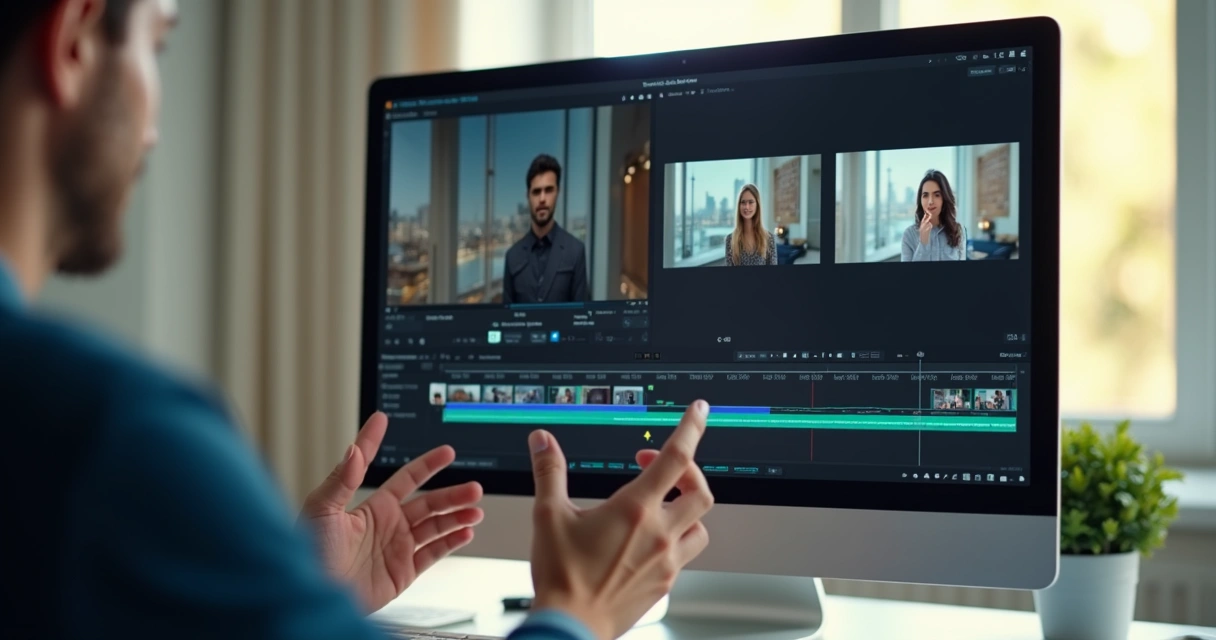 The result is clips adjusted for different networks, ready for upload, all in a matter of minutes. Just review if each cut meets expectations and publish.
The technology behind it: tracking, detection, and intelligent cutting
The secret of AI reframe lies in three fundamental topics:
- Subject detection: identifying which person, face, or group deserves the center of the video.
- Movement tracking: following the displacement of the main focus throughout the recording.
- Dynamic cutting: adjusting the framing of the shot in real-time, adapting to the intended ratio.
Additional features, such as speech analysis to detect who is speaking or automatic zoom adjustments, ensure that the final experience feels natural. Robust tools allow for choosing between different speed levels and even suggest minor manual revisions in more complex situations, for example, when two faces alternate in focus.
The focus is not on perfection, but on delivering watchable and visually appealing videos for each network.
The manual process vs. AI reframe
In the manual process, each segment requires cutting, moving the frame, adjusting frame by frame, and exporting for each format. For long videos or high content volume, this blocks growth on networks and makes it difficult to maintain posting frequency.
With AI reframe, the adjustment is made all at once, saving time and avoiding rework. This opens space for the creator to focus on what truly matters: creating, interacting, launching new content, and growing on platforms.
 Advantages for different profiles
 Advantages for different profiles
- Content creators: publish the same video across various networks, with each version adjusted for the right algorithm.
- Podcasters: replicate the entire content into Shorts, Reels, and even LinkedIn, without losing rhythm or naturalness.
- Companies and agencies: gain agility in clipping events, podcasts, and interviews, multiplying campaigns.
Why think about formats?
Each platform values a specific screen ratio. TikTok and Reels are vertical (9:16), the Instagram feed and LinkedIn tolerate squares (1:1), while classic YouTube remains horizontal (16:9). YouTube Shorts follow the vertical trend.
- On TikTok, horizontal videos are usually ignored or lose reach;
- Instagram Reels prioritizes vertical uploads, and the feed can be square;
- YouTube Shorts prioritizes vertical content, while the main channel uses horizontal;
- LinkedIn accepts various formats, but video posts perform better in 1:1.
Maintaining copies of the same content in different formats is a smart strategy to expand reach and engagement without doubling the effort.
AI reframe in the editing and publishing experience
In the daily routine of those working with video, AI reframe makes a difference. The integrated use in the editor eliminates repetitive steps, centralizes everything in one platform, and speeds up publication.
By using the right system, like VDClip, the creator experiences:
- Automatic tracking of people;
- Design tailored for short cuts and social clips;
- Automatic generation of synchronized multilingual subtitles;
- Suggestions for titles and hashtags;
- Integration with social networks, facilitating scheduling;
- Ease of creating different versions of the same video directly in the interface.
VDClip solves, in minutes, a problem that previously took hours for editors and clippers. The user uploads the video, defines the output formats, and obtains multiple files ready to publish on different networks.
Practical cases: when AI reframe makes a difference
Each year, new types of content emerge, but converting to multiple formats remains a mandatory step. Here are some examples of applying AI reframe in the daily digital content routine:
 Transcription of interviews into short clips, keeping the interviewee framed;
- Extraction of viral cuts from podcasts, ready for Shorts and TikTok;
- Creation of quick video lessons for professional social networks;
- Repurposing online events into Stories, Reels, and feeds;
- Promotion of webinars in multiplatform formats.
 Transcription of interviews into short clips, keeping the interviewee framed;
If the goal is to increase views and connections, using tools that integrate AI reframe and cut automation is, today, the smartest choice.
VDClip brings together all these points in a platform that democratizes editing, suggests automatic cuts with AI, generates dynamic subtitles, provides real-time translation, and integrates visual tracking directly into the online editor.
How to choose the ideal format for each network
The rules change according to the audience and the network. To ensure the best reach:
- Adopt 9:16 for TikTok, Reels, and YouTube Shorts
- Prefer 1:1 for Instagram and LinkedIn feeds
- Use 16:9 for long videos on traditional YouTube
Saving copies of the same video adapted for each platform can expand reach by thousands of views without manual rework.
Links like this one about how to edit videos automatically for YouTube Shorts show efficient ways to set up practical workflows.
The influence of AI reframe on social media engagement
The logic of social networks has changed. Platforms prioritize native formats in their recommendations. This means that, regardless of the content, the right video in the right format will receive more deliveries in the feed, and consequently, more views and interactions.
The recent report already indicated that short videos surpass traditional television in preference, showing that adapting to this consumption is essential for anyone looking to remain relevant.
From manual work to intelligent automation
Videos edited manually are far from disappearing, but for those dealing with high volume and needing recurrence, automation is a differential. AI reframe acts as a production and posting partner, optimizing the routine of the modern creator.
Artificial intelligence does not replace the creative eye, but eliminates repetitive processes. With native integration, platforms like VDClip offer users features such as:
- Intelligent editing with AI to find the best clips of the content;
- Automatic curation of the most relevant moments;
- Customizable templates for each format;
- Support for long videos, cuts, subtitles, and scheduled publications;
- Automation of export processes for multiple formats and media.
These functions create competitive advantages for both those working alone and in teams.
Frequently asked questions about AI reframe
What is AI Reframe?
AI Reframe is an artificial intelligence-based technology that automatically adapts videos for different screen formats—vertical, horizontal, or square—while always maintaining the visual focus, usually the face or central person, without the need for manual and repetitive cuts. The system analyzes the video, identifies who is important in the frame, and adjusts the framing according to the chosen ratio, even tracking the movement of the subject. This makes it much simpler and faster to publish the same content on the right platforms.
How to quickly adapt videos for Reels?
To quickly adapt videos for Instagram Reels, just use an editor that offers AI reframe, such as VDClip. The process is simple: upload the original video to the platform, choose the vertical ratio (9:16), wait for the AI to identify and center who is speaking, review, and export the ready clip for Reels. Thus, the horizontal video turns vertical in minutes and is ready to post. More practical tips are available in the article about how to grow using automatic cuts for TikTok and Reels.
Is it worth using AI Reframe?
Yes, especially for those who want to publish regularly across various platforms and cannot afford to spend time on lengthy edits. AI reframe ensures speed, centralizes visual focus, reduces errors, and eliminates the repetitive work of cutting, repositioning, and exporting videos manually multiple times. The process becomes more agile, freeing up time for creativity or strategy.
How much does it cost to use AI Reframe?
The investment varies according to the solution adopted. There are free options with limitations that can serve for testing or occasional demands, but advanced tools like VDClip offer paid plans that are worthwhile for those seeking agility, automation, and professional resources, such as automatic cuts, dynamic subtitles, direct integration with social networks, and unlimited exports. Compared to the cost of hours spent manually or hiring external services, automation pays off quickly.
What formats does AI Reframe support?
AI Reframe generally supports the main formats used by social networks: vertical (9:16), square (1:1), and horizontal (16:9). Thus, it is possible to transform a horizontal podcast into several vertical videos for TikTok, Shorts, and Reels, extract square versions for LinkedIn, and keep the long originals on YouTube. Platforms like VDClip allow users to export multiple cuts in different ratios automatically.
Conclusion: AI reframe opens new possibilities
Anyone producing videos needs to adapt to the rhythm of social networks. AI reframe emerges as a strategic solution, making it possible to maximize each piece of content, adapting formats with just a few clicks and connecting with multiplatform audiences. The results are already clear: more reach, more engagement, and routines less hampered by repetitive tasks.
Tools like VDClip show that creating short, viral, and optimized videos is within the reach of any creator, even those without prior editing experience. Intelligent automation, face tracking, and dynamic cutting make video adaptation a simple and accessible step.
If the goal is to grow on social networks, save time, and deliver videos that truly connect, don’t waste time on manual edits. Discover the potential of AI reframe and explore solutions designed to simplify your workflow. Visit VDClip.com, learn about the available resources, and transform each video into new audience and growth opportunities.