

Social media never stops. Each new trend, effect, or viral audio generates millions of views in minutes. The challenge for social teams is clear: to produce short videos consistently, quickly, and without compromising quality or identity. All this while each platform demands different formats, sizes, and styles. And those who experience this daily know: keeping the bar high in terms of volume and creativity is no longer just a differential; it’s a rule for growth and engagement.
Short videos have changed the digital language and information consumption habits in Brazil. A recent survey shows that 76% of Brazilians regularly use the format to inform themselves; two-thirds watch at least one informative short video per week, reinforcing the importance of video as the main entry point on social networks (study reveals that two-thirds of respondents watch at least one informative short video per week). Behind this behavior is the pressure on brands, creators, and social teams to double their output. However, traditional methods cannot keep up with this pace. This is where artificial intelligence (AI) changes the game, not only accelerating production but also ensuring visual standards, clarity, and relevance.
More videos, less time. Only with AI does the impossible become routine.
The Challenge of Scaling Short Videos: Rhythm, Quality, and Identity
It has never been easier to record a video, but it has never been harder to maintain standards, consistency, and creativity when volume spikes. Platforms like TikTok, Reels, Shorts, and Kwai demand daily content, sometimes in the dozens of clips per week. On the other hand, the fragmentation of traditional editing flows hampers operations: professionals waste hours selecting snippets, cutting frames, manually captioning, and adjusting formats for each platform.
The big dilemma is ensuring:
- High frequency without losing quality
- Visual standards that respect the brand’s identity
- Intelligent adaptation for different networks
- Real engagement in the first few seconds
In this scenario, long and complete videos hardly resonate with most audiences anymore. According to research from the University of Macau, fast consumption formats even change how people learn and interact with the world, benefiting virality but also posing attention challenges. This underscores the importance of capturing the essence of content in the first few seconds, with clear audio, visual focus, native cuts for the platform, and dynamic captions.
But how to achieve this without increasing costs or hiring an army of editors? The answer lies in the strategic use of AI to modulate production, accelerate feedback cycles, and concentrate energy on what truly matters: creativity and human connection.
AI Video Tools: New Allies for Social Teams
AI video tools are systems that intelligently automate repetitive tasks in video production without eliminating the human creative touch. They operate in several stages:
- Automated content analysis (audio and video)
- Selection of the best snippets, dialogues, expressions, and movements
- Editing cuts quickly and precisely
- Automatically synchronized captioning (multilingual or focused on native)
- Adaptation for multiple formats (vertical, square, horizontal)
- Automatic improvement of audio, framing, and visual clarity
- Creation of titles, hashtag suggestions, templates, and overlays
AI acts as a multiplier, freeing up team time for strategies and approvals, rather than getting bogged down in mechanical tasks. It also allows for quick adaptation as new memes, trends, and favorite formats emerge.
 Why is AI Indispensable for Short Videos on Social Media?
 Why is AI Indispensable for Short Videos on Social Media?
The pressure to deliver more, with increasingly higher technical standards and appealing visual language, requires:
- Clips in native format (vertical, with dynamic cuts)
- Clear and legible audio, without noise or variations
- Adjusted visual focus, with face tracking and automatic zoom
- Captions that match the pace of speech, with high contrast
- Ability to quickly adapt a clip for different platforms
- Quick responses to replicate what is going viral
Traditional flows simply cannot keep up with these demands, stalling operations or forcing compromises in quality. AI eliminates manual bottlenecks, suggests improvements, and expands experimentation, reducing costs and optimizing teams even when small.
Most Relevant Features of the Best AI Video Tools
By observing the platforms and apps most adopted by social teams, some patterns emerge regarding what makes sense to prioritize:
- Scalability, transforming long videos into multiple clips for different networks without increasing manual effort
- Creation features, automatic generation of cuts, clips, captions, and titles
- Technical enhancement, improvement of audio, fine adjustment of framing, increased sharpness, visual adaptation
- Multi-platform adaptation, optimized export for TikTok, Reels, Shorts, and other emerging formats
- Process automation, integration of publishing, review, and scheduling flows
- Team collaboration, feedback, adjustments, simultaneous revisions, and chain approvals
Tools that cover the entire cycle allow for growth without losing standards, while isolated solutions (only cuts or only captioning) tend to block scalability at some point.
It is worth noting that despite all the automation, human creative direction makes a difference in the final adjustment, the selection of the best highlights, and the definition of the brand’s identity.
Comparing Approaches and Tools in the Market for Social Teams
Among so many promises of automation, not every solution caters to small and medium teams with consistency, agility, and flexibility in mind. Therefore, understanding the profile of each platform makes a difference in the choice and also in the growth of the audiovisual strategy on social networks.
Async: Speed, Flexibility, and Professional Repetition
Async stands out by integrating all the main cycles of the social video workflow. Its differential is uniting recording, editing, audio adjustment, automatic captioning, clip generation, text-to-speech, and even a studio in the browser. All of this focused on accelerated repetition (great for podcasts, interview series, and educational videos), speed in automatic cuts, and ease of adaptation between vertical and horizontal formats.
A highly valued resource by teams is the ability to conduct recurring cycles and create multiple versions for different platforms with predefined export standards, as well as integrated collaboration, which reduces rework and cross comments.
Another important point is the tiered pricing model, allowing for scaling according to volume and testing functionalities with lower initial investment before ramping up to intense production cycles.
For those who live off continuous cycles, multiple formats, and demands for quality and speed, platforms focused on repetition and agility are a natural choice.
Recommended usage profiles for solutions like Async:
- Teams or creators producing recurring series (podcasts, cuts, weekly interviews)
- Demands for visual and audio consistency across multiple projects
- Collaborative workflow, with real-time approvals and reviews
- Need for quick adaptation to different proportions
Other Approaches to Using AI for Social Videos
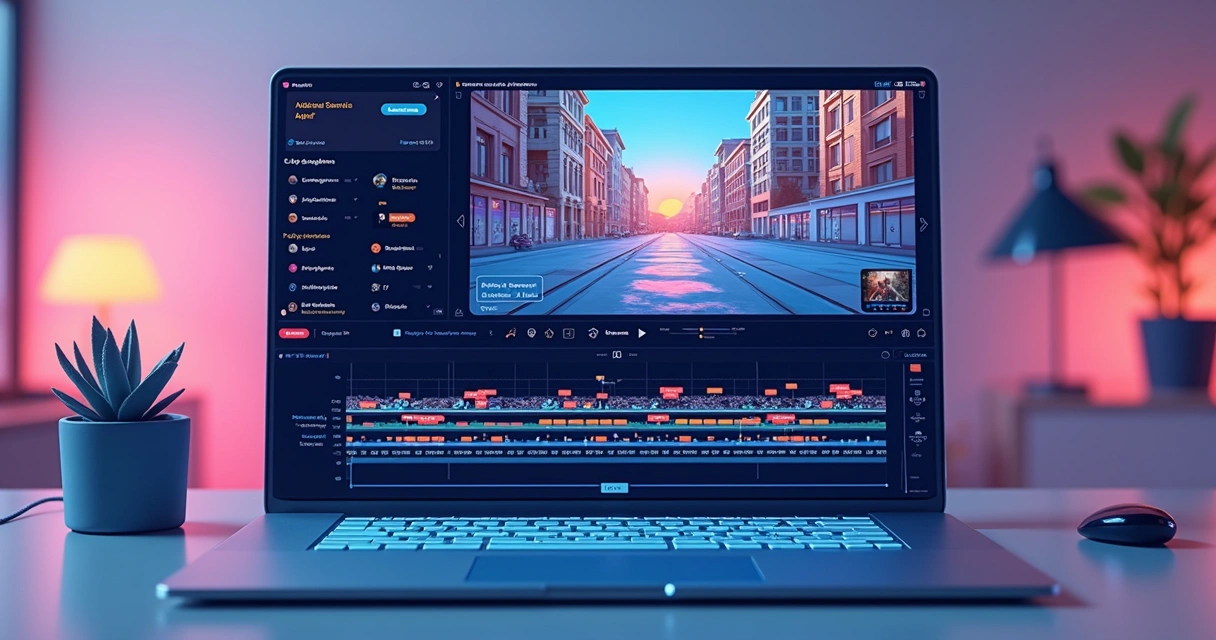 Other Approaches to Using AI for Social Videos
Not all teams need complete and robust workflows. In certain contexts, solutions more focused on specific stages of the process make sense. Some known alternatives work with:
- Editing by transcribed text, practical for spoken videos and podcasts, with limitations when the volume and variety of formats increase
- Automatic captioning, with quick social export, ideal for short turnaround but limited in complex flows
- Light collaboration tools and focus on multiple formats, useful in teams that value team review, but without deep automation
- Automation in creating short clips from long videos (clipping), typically composing production stacks that involve other manual stages
- Transforming texts and scripts into videos with stock images, direct and objective for marketing, less effective in original videos or with real people’s presence
The ideal choice depends more on the team’s routine than just on the number of existing functions. Solutions that only cut or caption usually have lower base prices and fit teams looking to resolve specific bottlenecks, while integrated platforms alleviate rework and centralize data and reviews in one panel.
Regardless of the path, industry experts recommend documenting flows and avoiding fragmentation: each additional fragment multiplies parallel comments, delays, and the risk of losing visual identity across different clips.
The Role of VDClip in Scalable Social Video Production with AI
In the quest for agility and high standards in cuts, captions, and distribution across multiple networks, platforms like VDClip play a prominent role. Produced in Brazil, VDClip solves one of the biggest bottlenecks: the agile transformation of long videos into multiple viral and optimized clips, even for small or novice teams without editing experience (understand how short video with AI is revolutionizing content production).
Among the features most cited by the Brazilian audience are:
- AI curation of the best snippets and dialogues from the video
- Automatic generation of cuts and synchronized captions
- Face tracking to maintain visual focus
- Suggestions for titles, hashtags, and templates for each network
- Optimized exports for TikTok, Instagram, Reels, and Shorts
- Integration with scheduling and direct posting
- Resources to monetize video cuts, as detailed in strategies for monetizing short videos with AI
VDClip presents itself as a strategic partner to create volume with professional standards, democratizing audiovisual production on Brazilian social networks. Furthermore, being entirely national, it understands the demands of language, formats, and preferences of the local audience, ensuring greater cultural connection and adequacy.
 How to Scale Videos While Maintaining Visual Consistency and Team Collaboration?
 How to Scale Videos While Maintaining Visual Consistency and Team Collaboration?
Scaling videos is not just about multiplying quantity. The leap in performance comes from clear production cycles, automation at the right points, and plenty of documentation. The teams that grow the most follow some patterns:
- Use AI where it makes sense (cutting, captioning, adaptation) and keep human review on creative details
- Centralize panels, versions, and comments to avoid noise and rework
- Standardize templates, colors, logos, and overlays already in the automatic processes
- Measure performance not just by views, but by watch time, comments, and shares
- Create libraries of “best moments” and refine standards with each cycle
Consistency comes from standards, but real connection requires creative stamina and adjustment to each trend.
Tools like VDClip help structure integrated flows, centralizing cuts, captions, and format adjustments. This way, each team member can review, adjust, or approve with just a few clicks, maintaining the visual standard even with remote teams or constant demand changes (learn more about how video editing with AI helps social teams).
Smart Flows: Agile Cycle, Quick Review, Measured Engagement
The most efficient flows combine:
- Automation in cuts and captions (with quick review)
- Templates and automatic platform adjustments
- Collaborative review with version monitoring
- Rapid experimentation (testing variants and iterating based on real data)
Experimentation is only possible because AI frees up time to create, learn from the data (watch time, share rate), and adjust standards every week, scaling what works for the whole team.
Adapting to Multiple Formats and Platforms: How to Avoid Losing Engagement?
Subtle changes can derail video performance: a wrong aspect or illegible caption can already harm the impact. Therefore, adapting a viral cut for three or more networks requires meticulous attention to:
- Native visual proportions (vertical 9:16 for TikTok/Reels, square or horizontal for others)
- Compatible captioning in size, color, and synchronization
- Ideal duration time, respecting the habits of that community
- Clear visual call in the first 3 seconds
- Compliance with soundtrack and copyright
AI allows for creating optimized derivatives of the same cut, each with details adjusted for that audience profile, increasing frequency without sacrificing standards. The use of templates facilitates adjusting colors and fonts to the look of each network, always maintaining the brand’s visual identity. VDClip’s viral clip generator is an example of how to automate this adaptation and save the team’s precious time without losing relevance.
Three networks, three styles… One cut, multiple possibilities for virality.
Quality, Presence, and Legibility: The Foundation of Real Engagement
In the world of short videos, the first few seconds decide everything. Between swiping and liking, those who deliver:
- Crystal clear audio, without noise, easy to understand even without headphones
- Visual presence, face in focus, good lighting, clean contrast
- Striking text, automatic captions, but well-reviewed and positioned
- Brand identity, colors, typography, borders, and logo integrated into the video
The ideal cycle is to maintain minimum standards across all cuts, quickly test variations, and measure engagement by watch time, shares, and relevant comments.
Well-structured processes document which standards work and help quickly train new team members, maintaining the standard even in scenarios of rapid growth or intense trend seasons.
Advantages of Automation for Social Teams
Teams that invest in targeted automation, with AI and agile cycles, reap visible advantages:
- Scale production without increasing costs or overloading collaborators
- Test versions of cuts, captions, and titles, quickly learning what succeeds
- Centralize approval and review, cutting communication noise
- Increase consistency in publications, strengthening digital presence
AI enables small teams to operate at the pace of large operations, with standards, security, and agility. In Brazil, platforms like VDClip make this transformation even more accessible, democratizing the era of smart videos (learn more about automation with AI automatic cuts).
How to Measure and Improve Results Without Losing Quality?
 How to Measure and Improve Results Without Losing Quality?
Real engagement (like watch time, shares, and comments) is always the benchmark. Modern tools, like VDClip, enable monitoring performance, training standards based on the best moments, and automating experiments with multiple variants of the same content, ensuring constant and decisive learning.
The secret is not to produce dozens of videos per week, but to repeat what engages, with a fixed standard of visual quality, clean audio, and effective captions.
Test quickly, learn, and adjust: this is how to build a relevant short video strategy, regardless of the team’s size or budget.
Conclusion: AI is No Longer a Differential, It is a Prerequisite for Scale and Quality in Videos
Social platforms demand more and more volume, agility, and visual finesse to maintain relevance. Manual workflows can no longer keep pace, stalling the growth of brands and creators. Integrating artificial intelligence into workflows, whether in isolated stages or in complete platforms like VDClip, allows for scaling productions, refining standards, and delivering real engagement with speed, creative control, and consistency.
The challenge has shifted from adopting AI to intelligently fitting it into the team’s daily routine. Those who align strategic clarity, automation at the right bottlenecks, and minimum standards without sacrificing creativity lead the new era of social content. And for those looking for this journey, trying VDClip is a safe first step towards excellence in short video made by Brazilians, for Brazilians.
If you’ve made it this far, take the opportunity to check out VDClip.com to transform your short video strategy at scale; your social team will thank you.
Frequently Asked Questions About Short Videos at Scale with AI
What are short videos at scale?
Short videos at scale are content of up to 60 seconds, produced in high volume and adapted for various social networks, with consistent technical and visual standards. They use automated tools and optimized processes to transform long recordings into dozens of ready-to-publish clips, ensuring frequency and standardization even for small teams.
How to use AI for short videos?
Artificial intelligence is applied at various points: selecting the best moments from the video, automatic cuts, generation and synchronization of captions, format adaptation (vertical, square, horizontal), and creation of titles and hashtags. Platforms like VDClip enable transforming long videos into multiple clips, already optimized for different platforms, saving time and manual work.
Is it worth automating social videos?
Yes, as automation with AI frees the team from repetitive tasks and allows them to focus on creativity and approval. The process ensures scalability, quality standards, and frequency in publications, making it feasible to grow the operation without increasing costs or relying on many specialized professionals.
What are the best AI tools?
The best tools are those that integrate automatic cuts, synchronized captioning, quick adaptation for multiple networks, team collaboration, and total control over formats. VDClip is a national reference for this type of production, along with platforms that offer automation of clips, captioning, joint review, and facilitated export. The choice should consider the team’s workflow, production volume, and visual standard requirements.
How to measure short video results?
Results are mainly measured by watch time, shares, comments, and retention rate in the first few seconds of the video. Tools with integrated analysis panels, like VDClip, help identify which standards yield more engagement and allow for rapid testing of variants, adjusting strategy based on real data.