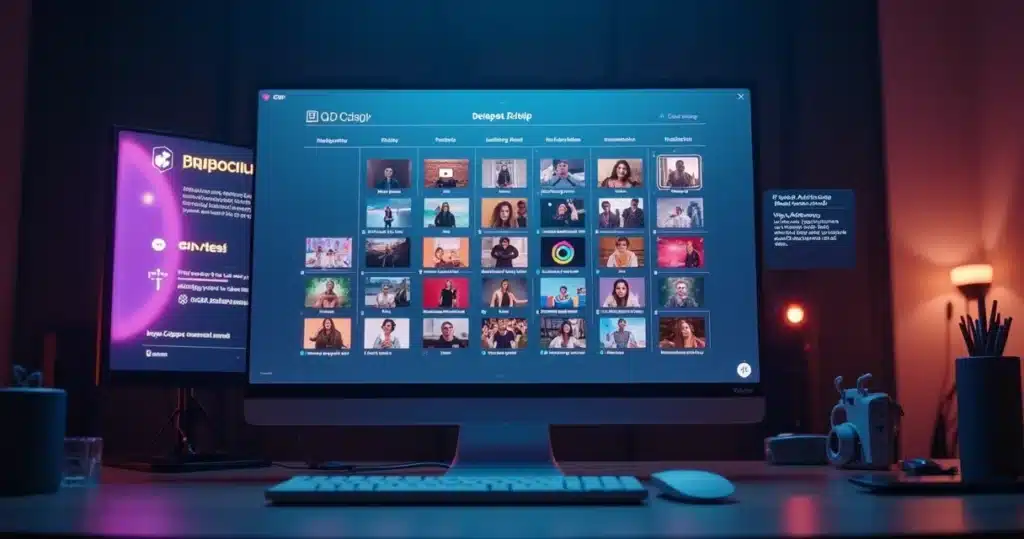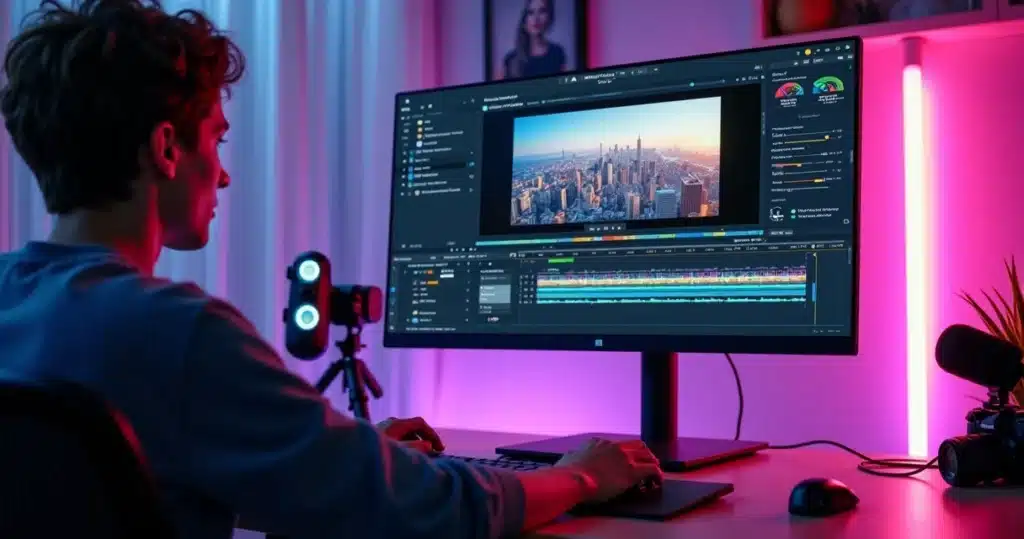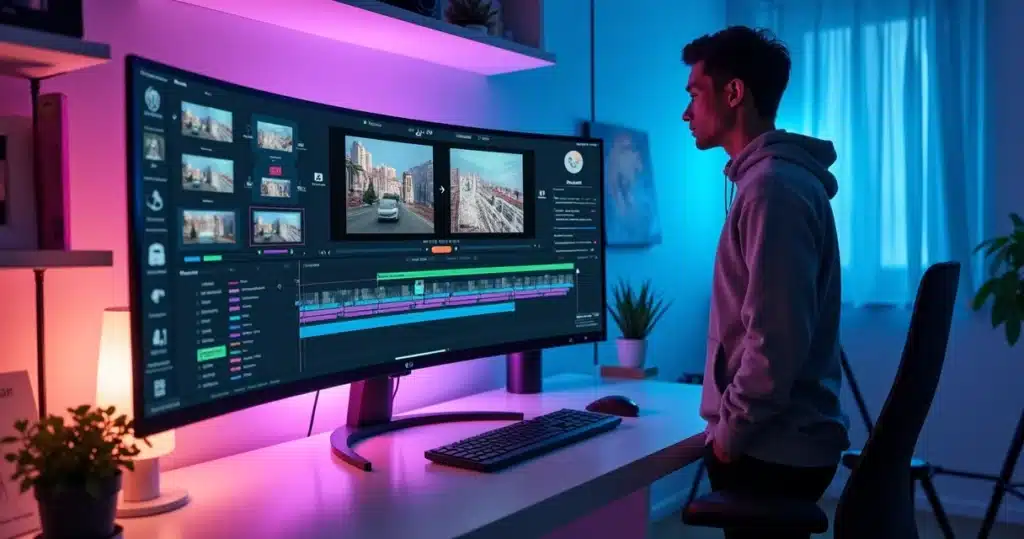
In 2026, the discussion about why hiring a dedicated editor for Shorts has become obsolete is no longer theoretical. It has become routine. Those who publish short videos frequently have already noticed a simple change: the bottleneck is no longer the lack of content. It is the speed of transforming raw material into ready-to-post pieces.
For years, the human editor took care of everything. They watched the entire video, searched for the best excerpt, cut pauses, inserted subtitles, adjusted framing, and adapted the format for each platform. This worked when demand was lower. However, the volume has grown. And the available time has not.
Shorts have become a flow, not an exception.
Therefore, manual editing has lost space. Not because human work has lost value, but because most repetitive tasks have begun to be done by AI more quickly, at a lower cost, and with less friction in the process.
The problem was not editing. It was scaling.
A creator records a 1-hour podcast. A company records a training session. An influencer streams live. In all these cases, there are several moments that can turn into short videos. The problem arises when someone has to watch everything, select excerpts, assemble clips, subtitle, and schedule posts.
This model consumes time, increases costs, and creates a backlog. When the operation depends on one person for each step, consistency drops. And a social media presence without consistency loses strength quickly.
The big shift of 2026 was to transform Shorts editing into an automated process.
This shift did not happen by coincidence. According to data on the advancement of AI in video creation, the adoption of such resources rose from 18% in 2024 to 41% in 2025. The use of AI for subtitles has also grown significantly. This shows that the market no longer treats automation as a test. It treats it as a natural path.
What AI does better daily
In repetitive tasks, AI already delivers a standard that is hard to match manually. It does not tire, does not slow down the flow, and does not need to start over with every new video. Platforms like VDClip were created precisely for this scenario.
In practice, the system automates points that used to take hours:
- Curating the best moments of the long video.
- Precise cuts based on speech, rhythm, and relevance.
- Dynamic synchronized subtitles.
- Suggestions for titles and hashtags.
- Face tracking and face motion to maintain visual focus.
- Refining the cut within a professional editor on the platform itself.
- Applying templates with logos, intros, transitions, b-roll, emojis, and brand kits.
- Audio cleaning and visual adjustments for publication.
- Mass posting and scheduling on social media.
This changes the game because the work no longer starts from scratch. The user already receives a ready base and just adjusts what makes sense.
Those who want to understand how this flow works in practice can see how automatic video editing with AI has begun to meet routines that previously required teams, deadlines, and constant exchanges.
 Is there still space for human editors?
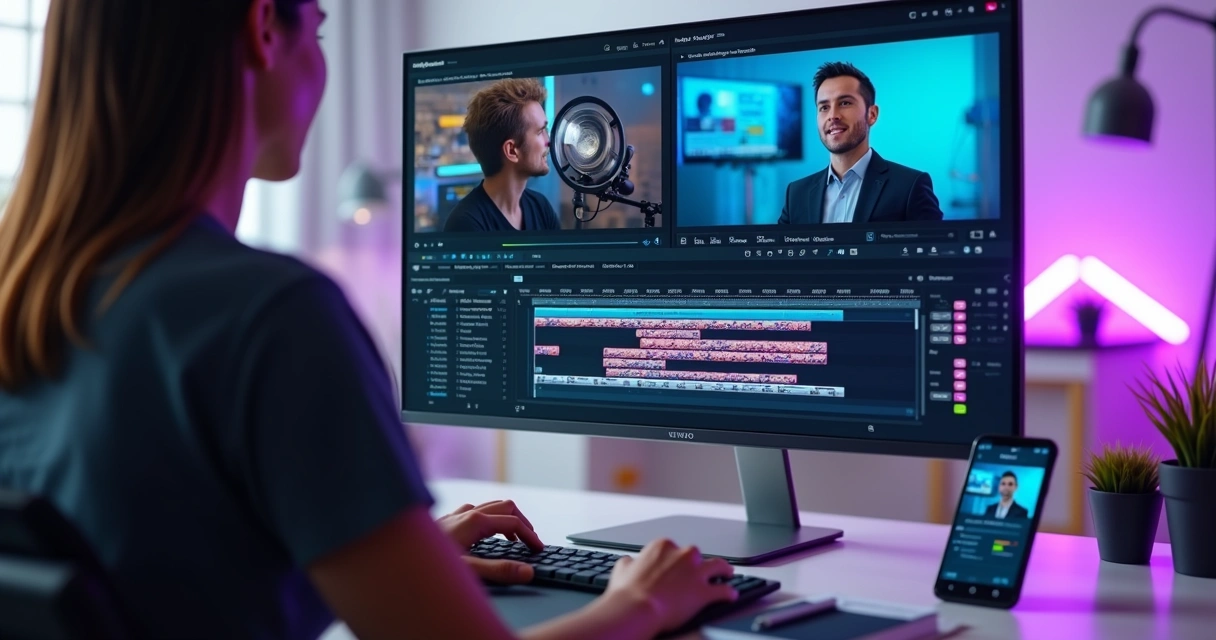 Is there still space for human editors?
Yes, but in a different place. The human editor remains strong in original pieces, campaigns with cinematic language, complex narratives, and projects where every second demands creative intention beyond the standard.
However, the routine short, that content that is born from a long video and needs to go live quickly, no longer requires a handcrafted operation in every case.
In 2026, the human editor is likely to operate where creative sensitivity weighs more than technical repetition.
This adjustment of function is healthy. The professional leaves tedious tasks to the machine and focuses their energy on what truly requires vision, context, and narrative.
Speed and cost have changed the equation
Previously, maintaining a high production of short videos meant hiring more people or accepting delays. Now, the equation has changed. A Brazilian platform like VDClip reduces steps that used to hold up the entire weekly schedule.
This primarily affects:
- Creators who need to publish daily.
- Podcasters who want to generate dozens of cuts per episode.
- Agencies with many clients and little room for rework.
- Companies that want to maintain an active presence without inflating the operation.
By replacing manual editing with an AI flow, the user reduces high costs associated with exclusive labor, shortens deadlines, and gains predictability. A long content can yield several shorts in minutes, not days.
This movement aligns with the media market. According to data from IAB on digital video with AI, about 30% of video ads are already created or enhanced with AI, with projections for further advancement by 2026. It is not just a trend. It is a structural adjustment.
Consistency is worth more than rare perfection
There is a common scene. A person records good content but takes so long to edit that they publish little. When they post, they have already missed the timing of the topic. On social media, this weighs heavily.
With AI, production no longer depends on long editing windows. The user can create more pieces per week, test more formats, and adapt materials for different platforms without disrupting their routine.
Those who work with long videos quickly realize this when they transform long videos into automatic Shorts. A podcast episode, for example, can generate clips with subtitles, vertical framing, and title suggestions in sequence. The operation begins to have rhythm.
Those who publish more learn faster.
This scaling gain is not just for influencers. It serves brands, sales teams, education, events, cut channels, and customer service. Every profile that relies on digital presence feels this effect.
From cut to post: the flow is complete
One of the biggest problems with manual editing was stopping midway. The video was finished, but it still needed to be named, uploaded to each network, filled with subtitles, adjusted covers, and chosen timing. Small tasks, big sum.
Today, tools like VDClip connect these ends. The user generates the cut, customizes the template, adjusts the logo and intro, cleans the audio, inserts visual elements, and proceeds to mass posting or scheduling.
When editing and publishing live in the same flow, the content moves from draft to social media with less friction.
For those who want to reduce operational dependency, it makes sense to understand how posting videos without an editor has become a real possibility for small teams and solo creators.
Why a Brazilian solution is gaining strength
 Why a Brazilian solution is gaining strength
In 2026, choosing national technology has also become a strategic decision. A 100% Brazilian platform understands the language better, the local consumption style, and the reality of creators and companies in the country. This matters a lot in subtitles, titles, speech rhythm, and support.
In the case of VDClip, this proximity appears in the simple proposal: automate what takes time and give space for the user to refine what they want. Those looking for automatic cuts with AI or want a flow for YouTube Shorts with automatic editing find a structure designed for the local routine.
It is not just about cutting video. It is about maintaining frequency, visual identity, and active presence without creating a costly and heavy system.
Conclusion
The question is no longer whether AI can edit Shorts. It can. And it does so with speed, easy access, and consistency. In 2026, hiring someone solely to execute short cuts, subtitle, reframe faces, apply face motion, and prepare posts has ceased to be the most logical choice for most cases.
The human editor remains relevant in signature works. But in the daily flow of short content, automation has taken center stage in operations. Platforms like VDClip show why this movement gained so much strength: they combine curation of the best moments, intelligent cuts, subtitles, personalization with brand kits, internal editor for refinement, and direct scheduling for social media.
Anyone wanting to move away from the slow and costly model can check out VDClip.com and see how creating Shorts at scale has become closer, more practical, and aligned with what 2026 demands.
Frequently Asked Questions
What does exclusive editor for Shorts mean?
Exclusive editor for Shorts is the professional hired to take care only of the creation and editing of short videos, such as vertical cuts for social media. They typically select excerpts, adjust framing, create subtitles, and prepare files for publication.
Is it worth hiring a human editor for Shorts?
It is worth it in specific situations, such as projects with authorial language, aesthetic direction outside the standard, or more complex narratives. For a high-volume routine and frequent publication, AI usually performs better, at a lower cost and with less delay.
What alternatives exist to human editors in 2026?
The main alternatives are editing platforms with AI that curate the best moments, automate cuts, provide subtitles, face tracking, face motion, visual personalization, and scheduling for social media. VDClip is an example of this model applied to the Brazilian market.
How to make Shorts without an exclusive editor?
The most common way is to upload a long video to a platform with AI, let the system identify the segments with the most potential, review the suggested cuts, apply a template, and schedule the post. This way, one person or a small team can maintain frequency without relying on manual editing for each piece.
Why has editing Shorts become obsolete in 2026?
What has become obsolete is not editing itself but relying on manual editing for repetitive tasks. In 2026, AI already performs these steps with great speed, good consistency, and lower cost. Therefore, keeping an exclusive editor just for this type of delivery has lost meaning in most operations.