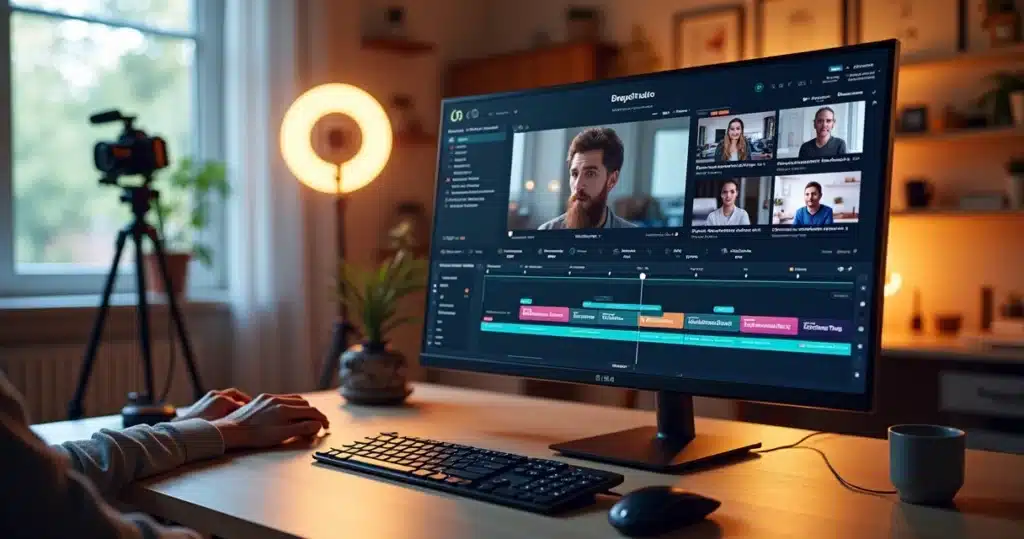
It is possible to generate income with short videos without relying solely on ad monetization from networks: campaigns and competitions can reward clips based on submission, performance, or valid views. For creators, podcasters, and clip editors, tools like VDClip and OpusClip help speed up editing and customize each post. Still, earnings are not guaranteed: the outcome depends on the rules, the quality of the content, and the validation of each campaign.
What You Need to Know Before Getting Started
- Campaigns and competitions create forms of compensation independent of platform ad revenue.
- Payment can depend on approved submissions, qualified views, goals, or ranking placement.
- More clips do not automatically mean more money: the briefing, retention, and validation rules matter.
- AI editing tools save time, but it is important to review each segment and give personality to the content.
- VDClip is starting to offer campaigns and contests within the platform, aiming to bring production and opportunities together in one place.
How Clip Campaigns Work
A clip campaign invites participants to create and publish short videos from authorized content, such as a podcast, live stream, or interview. The organizer defines the material, format, publication period, and criteria used to evaluate submissions.
In some initiatives, the reward depends on qualified views. In others, the winner is the one who meets a goal, publishes approved content, or ranks better. There are also campaigns that pay for the volume of accepted submissions, without tying all the value to reach.
This difference changes the strategy. If payment considers views, the focus is on finding moments that grab attention and publishing within the deadline. If the reward is for approved submission, meeting the format and requirements may be more important than seeking a viral video.
So, don’t just ask “how much does it pay?” Also check what counts as a valid view, if there is a payment cap, and how any disputes are resolved.
What Compensation Models You Might Find
The conditions vary from campaign to campaign. Read the table as a guide to recognize the models, not as a promise that every opportunity offers these payment forms.
| Model | How It Might Work | What to Check |
|---|---|---|
| Payment per Submission | Value per approved clip according to the briefing. | Submission limits, approval criteria, and payment schedule. |
| Payment by Performance | Compensation based on views or another valid metric. | Definition of qualified view, calculation period, and cap. |
| Ranking Competition | Prizes for participants who achieve the best positions. | Prize details, tiebreakers, ranking updates, and result date. |
| Recurring Service | A client hires a regular package for clip production. | Quantity, revisions, usage rights, exclusivity, and billing method. |
Payments per campaign are not the same as ad revenue. A channel may not be eligible for monetization on a network and still participate in an external opportunity, as long as it complies with the rules of the organizer and the platform where it publishes.
How to Evaluate If a Campaign Is Worth Your Time
An opportunity only makes sense when the rules are clear and the expected effort matches the possible reward. Before accepting, estimate how many hours will be needed to select segments, edit, publish, and track results.
- Source of Material: confirm that the organizer allows creating and publishing clips from that content.
- Payment Criteria: identify if compensation is by submission, view, goal, or ranking.
- Validation: see how links, numbers, and authorship of each publication will be verified.
- Publishing Rules: note duration, screen ratio, subtitles, hashtags, platforms, and dates.
- Commercial Conditions: check value, limits, deadlines, payment methods, and possible fees.
- Content Usage: understand how long the organizer can use your clips and on which channels.

If the campaign does not explain essential points, ask for clarifications in writing before starting. Transparency allows for comparing opportunities and avoids investing hours in work whose result or payment depends on unknown criteria.
How to Participate Without Publishing Generic Clips
A simple process helps produce consistently without turning your profile into a series of repeated videos. Instead of publishing any available segment, treat each clip as an independent piece, with a clear reason to be watched.
- Read the entire briefing. Mark the themes, prohibited words, format, deadlines, and campaign identification rules.
- Watch the original content. Note moments that have a complete idea, a story, a strong question, or a conclusion that makes sense outside the long video.
- Choose context-rich segments. A clip needs to be understandable for those who haven’t seen the full episode. Avoid taking a statement in a way that distorts the intention.
- Edit for the chosen channel. Adjust framing, pacing, and subtitles for mobile reading. Highlight the speech without hiding important information.
- Review before publishing. Check names, numbers, subtitle synchronization, audio, context, and rule compliance.
- Record the results. Keep links, dates, and requested metrics, as well as any confirmation of approval or payment.
An effective start can come from a question that sparks curiosity, but the clip needs to deliver an answer or a complete idea. Cutting speech in the middle to force a view can harm audience trust and retention.
How AI Tools Help in Production
Tools like VDClip and OpusClip can reduce manual steps by locating relevant moments, suggesting cuts, creating subtitles, and adapting framing. This is useful when a campaign requests multiple versions or requires publication on more than one social network.
Automation, however, does not replace editorial review. Check if the beginning of the clip is engaging, whether the speech has not been confusingly cut, and if the subtitles are correct. Personalize the pacing, framing, and presentation so that the videos do not look like mass-produced copies.
A practical flow is to import the long video, select suggested segments, correct the cuts, personalize subtitles and visual identity, export in the requested format, and check each file before publishing. This way, the tool speeds up execution without removing from the clipper the decision on what deserves to be shared.

The time saved should be used to improve selection and review, not just to increase the quantity of publications. A clear and well-contextualized cut has a better chance of meeting the briefing and providing a good experience for viewers.
How to Calculate the Return of a Campaign
Compare the expected compensation with the production time and the risk of the submission not being approved. The calculation below is only hypothetical and does not represent a market rate or real offer.
Imagine a campaign that pays R$ 2.00 for every thousand qualified views, without a cap, and that approves 80 thousand views in the defined period. The calculation would be: 80,000 ÷ 1,000 × R$ 2.00 = R$ 160.00. If the value is limited, there are disregarded views, or the clip does not pass validation, the payment will be different.
To estimate the return per hour, divide the actual amount received by the time spent on selection, editing, publishing, and tracking. Compare this result with other opportunities, including offering editing directly to creators or companies. Do not use an optimistic scenario as a forecast for income.
Rights, Originality, and Platform Rules
Having access to a video does not necessarily mean having authorization to republish or use it commercially. Confirm with the organizer which materials are allowed and if the permission covers each platform, the use of audio, promotional cuts, and potential boosting.
Do not confuse authorization from the content owner with approval for network monetization. YouTube states that it evaluates reused content and expects significant changes, original commentary, or educational or entertainment value; minimal changes may not be sufficient. Consult the YouTube monetization policies before counting on ad revenue.
When there is payment, product, or another commercial relationship, clearly indicate the partnership to the audience and follow the applicable rules in your country and on the platform. As an international reference, the FTC guidance for influencers recommends making the relationship with the brand evident; it is a reference from the United States and does not replace guidance on Brazilian rules.
Avoid artificial traffic, purchasing views, and any attempts to manipulate ranking. In addition to compromising trust, these practices can invalidate results or violate campaign conditions.
What Changes with Campaigns Inside VDClip
VDClip is starting to make campaigns and contests available directly on the platform. The proposal is to bring clip creation closer to participation opportunities, centralizing production and campaigns in one environment.
For those publishing clips, gathering editing tools and opportunities can reduce the switching between different services and make the flow more organized. The platform is already focused on creating short videos with AI resources to select segments, edit, generate subtitles, and customize content.
As the availability of campaigns is beginning, check on the platform itself which opportunities are open, their criteria, and conditions. Participation does not guarantee approval, reach, or payment. Read each regulation and assess if the campaign matches your profile and routine.
The best starting point is to create a repeatable process: choose well-explained campaigns, produce context-rich clips, review each publication, and track the actual return. This way, you learn which formats work without relying on promises of quick gains.
Frequently Asked Questions
How to Make Money with Clip Campaigns?
You can participate in campaigns that pay for submissions, qualified views, or performance in a competition. First, check the rules, usage rights, and calculation method; then produce clips that respect the briefing and track results. Payment depends on the criteria and validation of each campaign.
Is It Possible to Earn Money with Clips Without Network Monetization?
Yes. Some campaigns and competitions offer prizes or payments defined by the organizer, without relying on platform ad revenue. This does not mean guaranteed income: each opportunity has its requirements, limits, and specific ways to validate results. Read the conditions and do not count on views as automatic payment.
How Much Does a Clip Campaign Pay?
There is no universal amount. One campaign may pay for approved submissions, qualified views, goals, or ranking position, while another may offer just one prize. Check the rate, payment cap, calculation period, rules against invalid traffic, and when the organizer releases the money.
Do You Need Many Followers to Participate?
Not necessarily. Some campaigns accept participants with small profiles, while others consider reach, engagement, or publication history. Before starting, see if there are follower requirements and if the ranking measures total or qualified views. An organized profile and consistent content help demonstrate execution capability.
How to Choose a Safe Campaign?
A reliable campaign explains who organizes it, what content can be used, how results are measured, what the prize or payment is, and when validation occurs. Also, look for rules about copyright, usage of your image, exclusivity, and cancellation. Be wary of promises of certain gains or conditions that change without explanation.