
Anyone who records podcasts, interviews, gameplay, light classes, or behind-the-scenes content knows the scene well. The video lasts an hour. Sometimes two. And amidst all this, there are snippets that make us laugh right away but get lost in the volume of raw material. The good news is that there is now a practical way to solve this. When someone seeks to understand how to use AI to find funny moments in long videos, what this person really wants is to gain speed without losing the timing of humor.
The AI can locate comedic snippets by crossing audio signals, facial expressions, and the context of speech.
This process has ceased to be something distant. Today, technology can detect laughter, changes in tone of voice, unexpected pauses, facial reactions, and even the construction of a joke within a conversation. Instead of watching everything from start to finish in search of the best cut, the creator can work with already filtered suggestions.
In a scenario where TikTok, Instagram Reels, and YouTube Shorts reward quick and engaging videos, this changes the game. A well-cut funny snippet can grab attention in seconds. And in this format, seconds matter a lot.
How AI Recognizes Humor in a Video
Finding humor doesn’t just mean hearing laughter. Humor appears in various ways. Sometimes it comes from a short phrase. Sometimes it arises from the expression of the listener. In other cases, it depends on the breaking of expectations.
The latest systems read the video in a multimodal way, combining image, sound, and language.
This means that the AI observes different signals at the same time, such as:
- Detection of laughter and peaks of reaction in the audio.
- Reading facial expressions, such as surprise, contained laughter, and astonishment.
- Facial tracking to maintain focus on who is reacting.
- Analysis of dialogue and context of the conversation.
- Recognition of pauses, interruptions, and sudden changes in rhythm.
This type of reading is not just loose theory. A study presented at the AAAI Conference on Artificial Intelligence described a system for identifying humorous scenes in long videos, achieving an 18.3% gain in accuracy and an F1 score of 0.834 in humor detection. In evaluations, 87% of the extracted clips were viewed as funny, and 98% of the scenes were located accurately.
Another work, published in the International Journal of Computer Vision, showed how multimodal models can recognize funny moments by combining body language, dialogues, and cultural context. This helps to understand why the same silence can be just a pause in one video and a punchline in another.
Humor has a pattern. The AI learns to notice this pattern.
Why Long Videos Hide Great Cuts
A long video almost always mixes strong segments with lukewarm parts. The problem is that the funny moment may last fifteen seconds and be surrounded by twenty minutes of ordinary conversation. Without technological support, much good content gets overlooked.
This was highlighted by BMC’s blog when summarizing a study on live broadcasts and memorable moments. According to the research on memorable segments in live streams, algorithms can help human editors locate standout segments using audience reactions, visual structure, views, and metadata.
In practice, this directly relates to those who publish humorous cuts. The content already exists. The challenge is to discover where the funniest point is and how to deliver it with rhythm.
It is in this space that tools like VDClip make sense. Instead of relying on a tiring manual search, the creator can transform long recordings into short clip suggestions with the support of AI, something already explained in materials about video cutting with AI to transform long videos into viral shorts.
 The Workflow to Find Funny Moments
 The Workflow to Find Funny Moments
When the process is well set up, the search for humor stops being chaotic. It becomes a clear sequence. This helps even those who have never edited.
Preparing the Video
The first step is to upload a file with clear audio and stable image. It doesn’t need to be perfect, but some care helps a lot:
- Reduce background noise when possible.
- Keep speech audible and without abrupt cuts.
- Separate very long episodes into thematic blocks.
In VDClip, this start can gain strength with audio cleaning resources, automatic captioning, and an internal editor. This already saves time even before the cuts appear.
Choosing the Parameters
Next comes the definition of what the AI should look for. Not every funny video has the same style. A humor podcast reacts one way. A behind-the-scenes video reacts another.
The best results emerge when the creator defines duration, rhythm, and reaction signals they want to prioritize.
Some useful parameters are:
- Duration of the cut, such as 15, 30, or 45 seconds.
- Priority for laughter, facial reactions, or impactful phrases.
- Vertical format for Shorts, Reels, and TikTok.
- Automatic focus on the main face with face-motion.
Those looking to learn more about this process can rely on content about video cuts to transform long recordings into clips, as the logic of humor depends a lot on a clean and well-placed cut.
Generating the Cuts
At this stage, the AI does the heavy lifting. It crosses text, image, and sound to suggest the most promising snippets. Instead of a hundred random possibilities, the creator receives a smaller and more useful list.
Many of the best moments are born this way: someone tells a common story, holds a pause, an unexpected response comes, the other participant makes a quick expression, the conversation erupts in laughter. The AI perceives this combination.
The real value of automation lies in reducing hours of searching for seconds of high impact.
Adjusting the Details
The AI helps a lot, but the final touch still counts. A cut may be better if it starts a second before the reaction. Another may yield more if it ends right after the laughter, without stretching it too much.
This refinement usually includes:
- Getting the exact entry and exit points right.
- Reinforcing the framing with face tracking.
- Inserting zoom on facial reactions.
- Cleaning long pauses that weaken the rhythm.
- Adding b-roll, emojis, or light transitions.
With a professional editor within the platform itself, VDClip allows this type of adjustment without requiring a tool switch. This makes the workflow simpler for those who want to publish consistently.
Customizing the Captions
Humor and captions go hand in hand. Many people watch without sound. Others understand the joke better when the key phrase appears highlighted on the screen.
Dynamic captions help hold attention and reinforce the comedic timing of the video.
The best practices include:
- Highlighting impactful words.
- Breaking sentences to match the rhythm of speech.
- Using high-contrast colors.
- Maintaining the brand’s visual standard with logo, intro, and transition.
Those who publish frequently also benefit from organizing a complete brand kit, with consistent visual identity across all cuts.
Practical Examples That Tend to Work
 Practical Examples That Tend to Work
Not all humorous content is born as a sketch. Often, the strongest cuts come from spontaneous situations. A creator records two hours of conversation. The best clip comes from twenty seconds. This happens a lot.
Some formats tend to respond well to AI selection:
- Unexpected reactions in podcasts and interviews.
- Funny mishaps in behind-the-scenes recordings.
- Gameplay snippets with scares or quick comments.
- Conversations in pairs with a short and strong response.
- Compilations of facial expressions in sequence.
- Cuts of embarrassing stories with punchlines at the end.
For those who want to produce at this pace, it makes sense to understand better the creation of short videos with artificial intelligence, as humor on social networks depends on agility, context, and format repetition.
A good practice is to separate cuts by intent. Some clips serve for immediate laughter. Others hold curiosity and only deliver the funny part at the end. Both work, but require different edits.
How to Improve Retention and Engagement
Finding the funny segment is half the battle. The other half is packaging that segment in a way that keeps the person watching until the end.
There are some patterns that help a lot:
- Open with the reaction, not with a long introduction.
- Use a quick cut in the first two seconds.
- Keep the frame close to the face when the expression matters.
- Highlight the strongest phrase in a larger caption.
- Avoid excessive effects that distract from the joke.
In short humor videos, retention increases when the audience understands the situation right from the start.
This is a point where face tracking and face motion make a difference. If the humor lies in the reaction of the listener, the video needs to follow that face. If the humor lies in the speech, the framing should reinforce who is leading the moment.
It’s also worth thinking in batches. A single long episode can yield several formats:
- Solo cuts with a punchline.
- Compilations of laughs from the episode.
- Sequences of “best reactions.”
- Versions with different titles to test hooks.
This method appears clearly in content about creating cuts with AI and also in English materials about AI clipping to transform long videos into viral shorts, something useful for those producing for more than one audience.
Why Automation Helps Even Those Who Have Never Edited
 Why Automation Helps Even Those Who Have Never Edited
Many people refrain from publishing because they imagine that editing is too much work. And when the material is long, this feeling grows. Automation reduces this barrier.
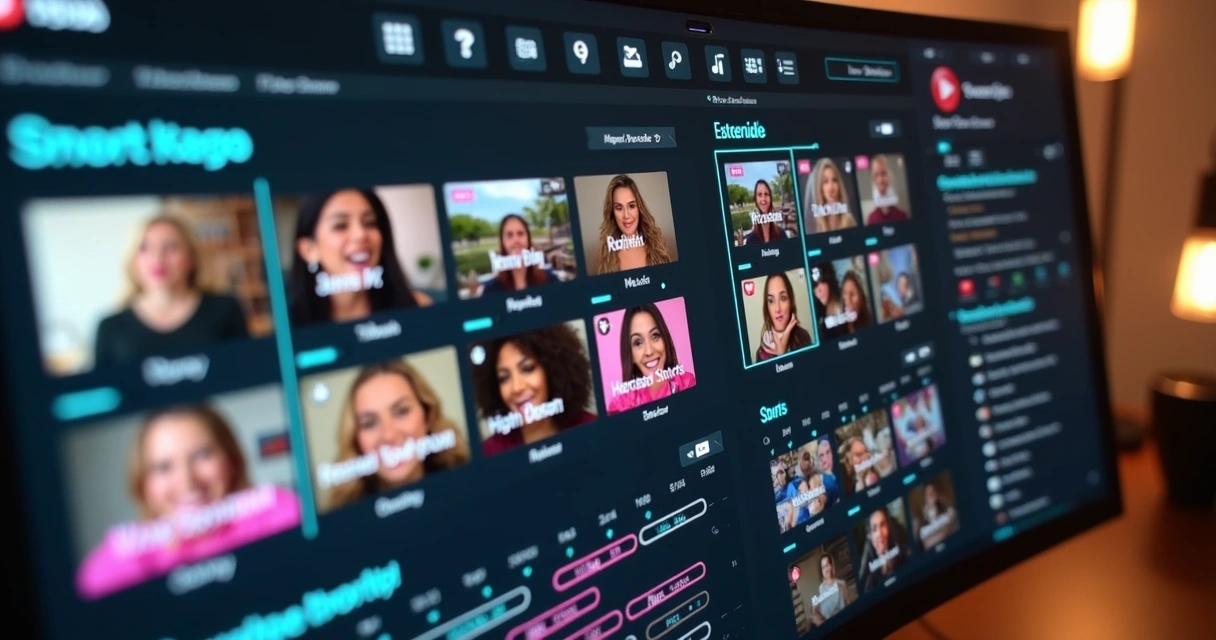
Instead of starting from scratch, the creator already receives suggested cuts, synchronized captions, adjusted framing, and a visual base ready for customization. With this, even someone without practice can go from raw footage to a publishable clip.
AI does not replace the human eye, but shortens the path between recording and posting.
In the case of VDClip.com, this path includes generating cuts, face tracking, face motion, audio cleaning, templates, b-roll, emojis, logo, intro, transitions, and even mass posting and scheduling directly on social media. For those who publish frequently, this reduces steps and helps maintain consistency without complicating the routine.
Conclusion
Learning how to use AI to find funny moments in long videos has ceased to be a technical curiosity. Today, this is part of the routine for anyone looking to transform hours of content into short clips with a real chance of engagement. Technology finds signs of humor in audio, facial expressions, speech context, and reactions. Then, it’s up to the creator to adjust the timing, reinforce the caption, and adapt the cut for each network.
When this process is done with the support of a platform designed for cutting, editing, and publishing, everything becomes simpler. For those looking to transform long videos into engaging cuts, it’s worth checking out VDClip.com and seeing how the tool can help move from raw material to clips ready for TikTok, Instagram, and YouTube Shorts.
Frequently Asked Questions
How does AI identify funny moments in videos?
AI identifies these moments by combining signals such as laughter in the audio, changes in tone of voice, facial expressions, pauses, speed of conversation, and context of dialogue. In more comprehensive models, it also observes who reacts, where the camera is focused, and how the scene evolves to the punchline.
What are the best AI programs for this?
The best programs are those that offer detection of standout segments, facial tracking, caption generation, simple editing, and adaptation for short videos. For those looking for a Brazilian option with this integrated flow, VDClip fits well in this type of work.
Is it reliable to use AI for video editing?
Yes, as long as AI is seen as support and not as an isolated final decision. It speeds up the triage, suggests cuts, and organizes the material with good consistency. Afterward, the creator can review the segments and adjust the timing to maintain the naturalness of the humor.
Do I need to pay to use these AIs?
This depends on the chosen platform and the volume of use. Some offer simpler initial access, while more comprehensive features usually fall under paid plans. The main point is to evaluate whether the time saved and the consistency of publication justify the investment.
Are the results of AI really accurate?
The results can be quite good, especially when the video has clear audio, visible faces, and well-defined context. Recent studies show high rates of success in locating funny scenes, but human review still helps choose the cut with the best timing and greatest chance of retention.